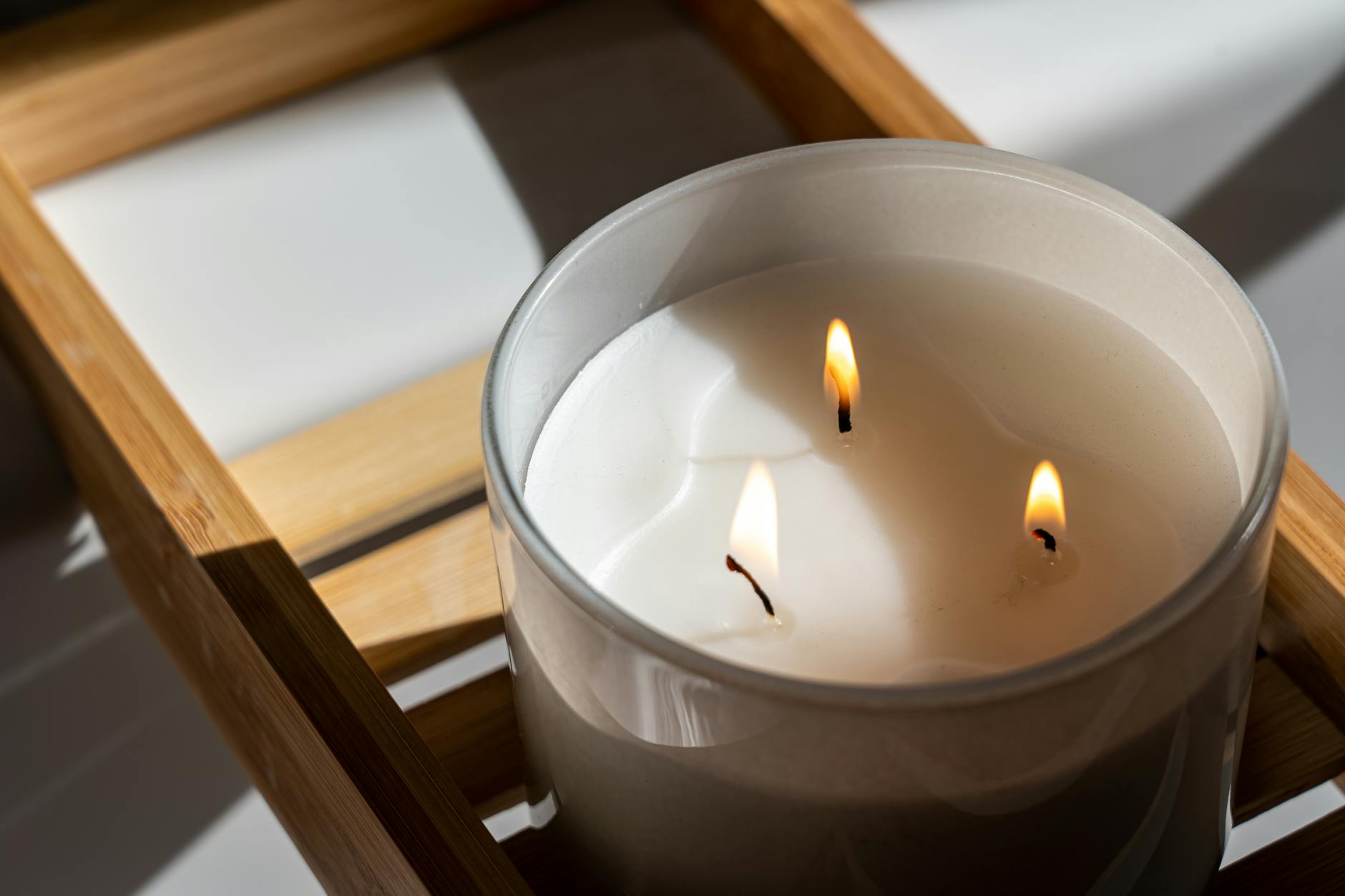
Candle Tunnelling: Causes and How to Prevent It
What Is Candle Tunnelling?
If you have ever lit a candle only to watch it burn straight down the middle, leaving a thick wall of unused wax around the edges, you have encountered tunnelling. It is one of the most common and frustrating problems in candle making, and it affects everything from small batch hobby candles made in a kitchen in Leeds to professionally produced pillar candles sold at craft fairs in Cornwall. The result is always the same: wasted wax, a shortened burn time, and a candle that looks distinctly unfinished.
Tunnelling is not just a cosmetic issue. A candle that tunnels will eventually drown its own wick as the melt pool deepens into a narrow well, leaving the flame starved of oxygen and fuel. In some cases, the wick goes out entirely before the candle has burned even a quarter of its wax. Understanding why tunnelling happens — and how to stop it — is one of the most valuable skills a beginner candle maker can develop.
Why Tunnelling Happens: The Science Behind It
Every wax has what is called a “melt pool memory.” During the very first burn, the wax learns how far it is supposed to melt outward from the wick. If that first burn is cut short — say, you only burn the candle for thirty minutes when it needs two hours — the wax solidifies with a narrow melt pool imprinted as its new normal. Every subsequent burn will follow that same narrow path, carving an increasingly deep tunnel through the centre of the candle.
This memory effect is strongest in natural waxes such as soy and coconut, which have softer textures and lower melt points than paraffin. Beeswax, while harder and more forgiving in some respects, is not immune either. Understanding this principle changes how you approach every stage of candle making, from wick selection through to the instructions you give customers about how to burn their candles properly.
The Most Common Causes of Tunnelling
Tunnelling rarely has a single cause. More often, it is the result of several small factors combining to push a candle toward poor burn performance. Here are the main culprits:
- Incorrect wick size: This is the leading cause of tunnelling in homemade candles. A wick that is too small for the diameter of the container or mould cannot generate enough heat to melt wax all the way to the edges. The flame stays small, the melt pool stays narrow, and the tunnel forms quickly.
- Too short a first burn: As explained above, the first burn sets the melt pool memory. For most container candles, the first burn should last long enough for the melt pool to reach the full diameter of the vessel — typically one hour for every inch of diameter.
- Wrong wax type for the application: Using a wax with a high melt point in a wide container, without a sufficiently large or multiple-wick setup, can result in tunnelling because the wax around the edges simply does not get warm enough to melt.
- Draught and cold environments: Burning a candle near an open window, a doorway, or in a cold room can cool the outer edges of the wax too quickly, preventing a full melt pool from forming even with a correctly sized wick.
- Fragrance oil overload: Adding too much fragrance oil — beyond a wax’s recommended fragrance load — can affect how the wax burns. Excess fragrance can interfere with the wick’s ability to draw fuel efficiently, reducing the heat output and shrinking the melt pool.
- Pouring temperature errors: Pouring wax that is too hot or too cool can affect the final texture and density of the set candle, which in turn influences how evenly it burns.
- Candle diameter versus wick pairing: Wide candles — anything over 8cm in diameter — almost always require multiple wicks or a specialist large-diameter wick to achieve a full melt pool.
Choosing the Right Wick: The Single Most Important Factor
Wick selection is where most beginners go wrong, and it is entirely understandable. There are dozens of wick series available in the UK — CDN, ECO, LX, wooden wicks, cotton core wicks — and each one behaves differently depending on the wax, fragrance, and container you are using. There is no universal chart that tells you exactly which wick to use; testing is always required.
UK suppliers such as Candle Shack (based in the West Midlands), The Soap Kitchen (Devon), and Cosy Owl (Wiltshire) all offer wick sample packs specifically for this reason. Buying a sample pack and conducting proper burn tests before committing to a bulk order will save you significant time, money, and wax in the long run.
As a starting point, most wick manufacturers provide a diameter guide — a rough recommendation based on the internal diameter of your container. Use this as a starting point only, not a definitive answer. Always test one size up and one size down from the recommendation, because the fragrance load, dye, and wax blend you use will all shift the performance.
When testing wicks, look for the following signs of a correctly sized wick:
- The melt pool reaches the edge of the container within four hours on the first burn.
- The flame burns steadily without excessive flickering or soot production.
- The wick mushrooms slightly but does not form a large carbon ball.
- The wax around the outer edges melts at a similar rate to the centre.
If your melt pool is not reaching the edges after four hours, move up a wick size. If the flame is too large, producing black smoke, or the candle is getting dangerously hot, move down a size.
How to Conduct a Proper Burn Test
A burn test is not simply lighting a candle and watching it for a few minutes. It requires patience and a consistent method. Follow these steps each time you test a new wick or formulation:
- Allow the candle to cure fully. Soy wax candles in particular benefit from a cure time of 48 to 72 hours minimum after pouring. Some makers allow up to two weeks for a full cure, which can improve scent throw and burn quality. Do not test a candle that has been poured within the last 24 hours.
- Trim the wick to 5mm before lighting. An untrimmed wick will produce a larger flame than intended and skew your test results. This is also the standard wick length recommended by the British Candlemakers Federation (BCF) for safe candle use.
- Burn in a controlled environment. Close windows and doors to eliminate draughts. Keep the room at a normal, comfortable temperature — not unusually cold or warm.
- Record the time and observe at regular intervals. Note how far the melt pool has spread at the one-hour, two-hour, and four-hour marks.
- Measure the melt pool depth. Use a cocktail stick or skewer to gently measure how deep the liquid wax pool is. A melt pool that is too deep too quickly may indicate the wick is too large.
- Extinguish safely and allow to cool fully before relighting. Do not continuously burn a test candle for more than four hours at a time, and always allow the wax to solidify completely before the next test burn.
- Repeat for at least three burn cycles. Tunnelling often does not appear until the second or third burn. A single burn test is rarely sufficient to confirm good performance.
- Document everything. Keep a notebook or spreadsheet recording the wax type, fragrance, wick size, container diameter, pouring temperature, and burn observations for each test. This information becomes invaluable when troubleshooting later batches.
Fixing Tunnelling in Candles You Have Already Made
If you have a finished candle that has already begun to tunnel, all is not lost. There are a few practical methods to rescue it, though they work better on mild tunnelling than on deep, established tunnels.
The foil method is the most widely recommended approach. Tear off a strip of aluminium foil and wrap it around the top of the candle, folding it inward to create a tent over the top — leaving a small hole in the centre for the flame to breathe. The foil traps heat around the outer edges of the candle, encouraging the wax walls to melt down and level out. Check the candle every 30 minutes and remove the foil carefully once the outer wax has softened. This method works best with container candles and is not suitable for pillar candles, which need their walls to remain solid for structural support.
For pillar candles that have tunnelled, the approach is different. You can use a heat gun or hairdryer on a low setting to gently warm and smooth the top surface of the wax once the candle is extinguished. This will not fully correct a deep tunnel, but it can help in the early stages. Some makers simply scrape out the hardened wax from inside the tunnel with a spoon and remelt it for use in wax melts, accepting the candle as a partial loss.
Candles that have tunnelled severely — with walls more than 1cm thick above the melt pool — are very difficult to rescue fully. At this point, prevention for future batches is the more productive focus.
Preventing Tunnelling: Practical Steps for Better Candles
Prevention is always more straightforward than correction. Building good habits into your candle making process from the start will significantly reduce the likelihood of tunnelling becoming a recurring problem.
- Always conduct wick testing before production runs. Never assume that a wick that worked in one fragrance will perform the same in another. Fragrance oils with different viscosities and flash points affect burn behaviour in meaningful ways.
- Include burn instructions with every candle you sell or gift. UK Trading Standards guidance encourages candlemakers to provide clear usage instructions, and burn time guidance is particularly important. Tell customers explicitly that the first burn should last until the melt pool reaches the edge of the container.
- Choose your
It is also worth noting that some wax types are more forgiving than others. Coconut wax and certain blended waxes tend to have wider melt pools and lower melt points, which can make achieving a full melt pool somewhat easier. Paraffin, when properly formulated, is efficient and consistent. Soy wax, despite its popularity, is among the more demanding waxes to wick correctly, partly because of its lower density and partly because small changes in fragrance load can shift burn behaviour noticeably. Knowing the characteristics of your chosen wax is not optional — it is a foundation of good candle craft.
If you are working with container candles specifically, the shape and material of the vessel matter more than many makers realise. Wide, shallow containers generally perform better than tall, narrow ones, because the wick does not have to work as hard to push the melt pool outward. Dark-coloured glass or thick ceramic containers absorb and retain heat differently than clear glass, and this can influence how quickly or evenly the wax melts. If you are switching container styles, treat it as a new product that requires fresh testing, regardless of how well your previous version performed.
Conclusion
Tunnelling is one of the most frustrating problems a candlemaker can face, but it is also one of the most solvable. In the vast majority of cases, it comes down to a small number of controllable factors: wick sizing, wax type, fragrance load, and how the candle is burned for the first time. By selecting the right wick for your specific combination of materials, testing methodically, and giving customers clear burn instructions, you can eliminate tunnelling almost entirely from your finished products. Whether you are making candles for personal use, as gifts, or to sell at markets and online, understanding why tunnelling happens puts you in a far stronger position to produce candles that burn cleanly, safely, and beautifully from the first light to the last.