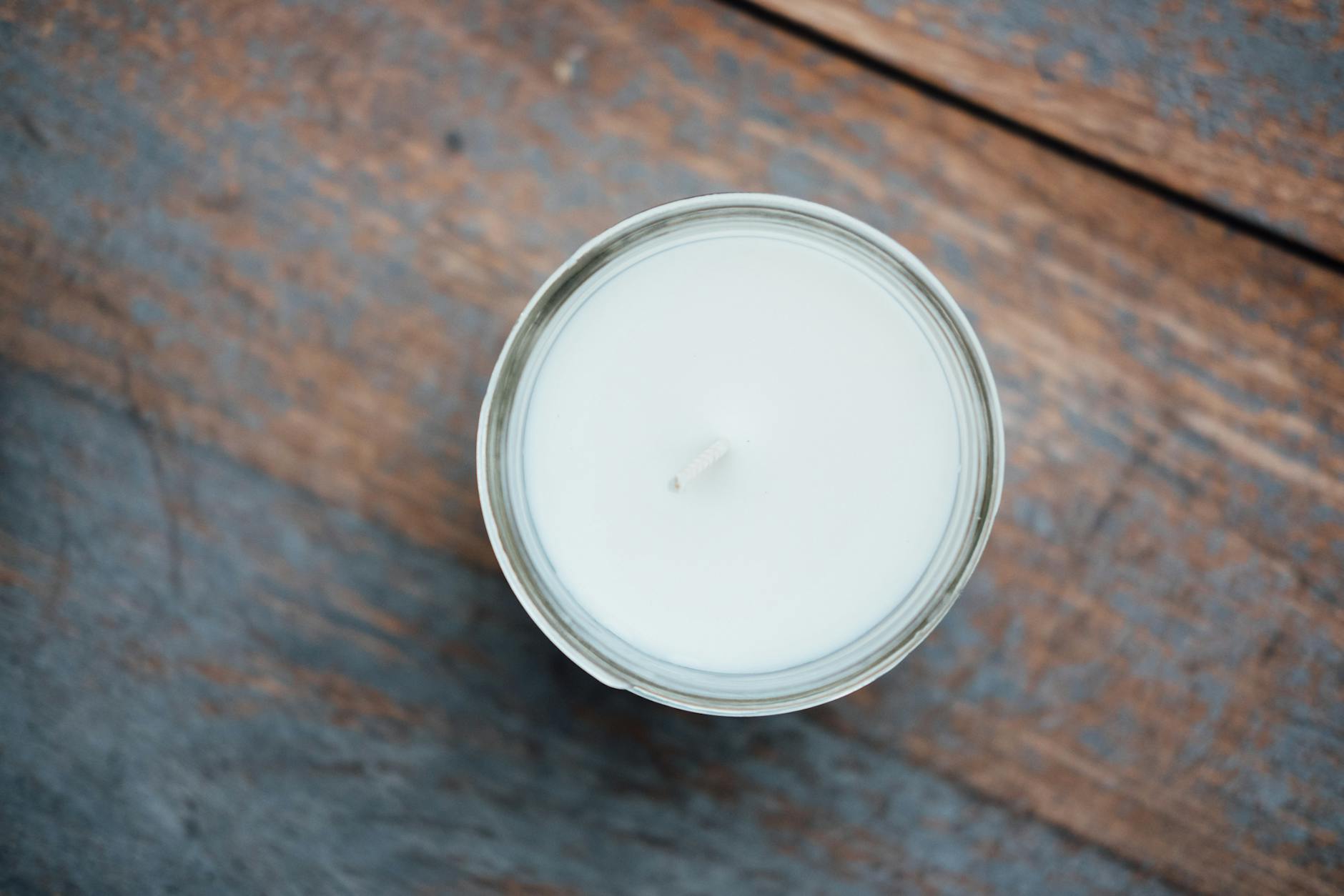
Why Your Candle Has Sinkholes and How to Fix Them
You have spent time melting your wax, mixing in your fragrance, pouring carefully into your jars, and then you walk back into the room a few hours later to find a horrid crater sitting right in the middle of your beautiful candle. Do not panic. Sinkholes are one of the most common problems in candle making, and the good news is they are almost always fixable. Whether you are brand new to candle making or you have been at it for a while and this problem keeps catching you out, this guide will walk you through everything you need to know.
What Exactly Is a Sinkhole?
A sinkhole is a depression, cavity, or hollow that forms in the centre of a candle as it cools and solidifies. They can appear as a small dip on the surface, or in more severe cases, they can create a deep tunnel running down through the candle body, sometimes even forming an air pocket hidden beneath an apparently smooth surface. That hidden variety is particularly sneaky because you do not notice it until you start burning the candle and the surface suddenly collapses.
Sinkholes happen because wax contracts as it cools. When the outer layer of the candle solidifies first, the wax still cooling and contracting in the middle has nowhere to go but inward, pulling the centre downward and leaving a void. This is a perfectly natural physical process, but it is one that experienced candle makers learn to manage and work around.
Surface Sinkholes vs Hidden Sinkholes
Surface sinkholes are the ones you can see immediately after your candle has cooled. The top of the candle looks uneven, with a noticeable dip or crater around the wick. These are actually the easier variety to deal with because you can see the problem and address it directly.
Hidden sinkholes are more problematic. The surface of the candle looks perfectly smooth, but underneath that top layer there is a cavity or air pocket. You might not discover it until the candle is lit and the wax pool reaches the hollow, at which point the top can cave in unexpectedly. To check for hidden sinkholes, gently insert a skewer or cocktail stick into the candle before it is fully cold, pressing carefully around the wick area.
Why Sinkholes Are More Than Just Cosmetic
If you are making candles just for yourself, a sinkhole might be nothing more than an annoyance. But if you are making candles to sell, sinkholes are a real issue. Under UK consumer law, goods sold must be of satisfactory quality and fit for purpose. The Consumer Rights Act 2015 applies whether you are selling at a local craft fair in Harrogate or through an online shop. A candle with a significant hidden sinkhole that causes the burning surface to collapse is not just unsightly — it could be considered a safety issue, and that matters when you are running even a small cottage business.
The Main Causes of Sinkholes
Understanding why sinkholes form is the first step to preventing them. There is rarely just one single cause — usually it is a combination of factors coming together at the wrong moment. Here are the most common culprits.
Pouring Temperature Is Too High
This is probably the number one cause of sinkholes for beginners. When you pour your wax too hot, the candle takes much longer to cool, which means the outer layer solidifies long before the interior does. That extended cooling time gives contraction plenty of opportunity to create a deep, dramatic void in the centre.
Every wax has an optimal pouring temperature range, and it is worth finding yours through testing rather than relying solely on what the supplier says. As a general rule, paraffin waxes are often poured anywhere between 55°C and 75°C depending on the type, while soy waxes are usually better poured cooler, often between 50°C and 65°C. Use a reliable thermometer — a decent digital probe thermometer from any kitchen shop will do the job perfectly well.
Cooling Too Quickly or in a Cold Environment
The opposite problem can also occur. If your candles cool too quickly — say, because you have put them near a draughty window or in a cold room — the surface solidifies very rapidly while the inside is still quite liquid. As that liquid interior cools and contracts, it has to pull the wax from somewhere, and the surface is where it comes from.
In the UK, especially during autumn and winter when many crafters are working in unheated spare rooms or garages, ambient temperature can drop significantly. Aim to cool your candles in a room that is roughly 18°C to 22°C, away from draughts, air conditioning, and direct sunlight.
The Type of Wax You Are Using
Different waxes have different contraction rates, and some are simply more prone to sinkholes than others. Natural waxes like soy and coconut tend to have higher shrinkage rates than paraffin. Beeswax, which is popular among UK crafters who source it from British beekeepers, can also be quite prone to surface sinkholes due to its high melting point and slow cooling behaviour.
Container waxes — waxes specifically formulated to adhere to the sides of a jar — generally handle contraction better than pillar waxes used in moulds. If you are using a pillar wax in a container, or vice versa, you may find sinkholes are more frequent than expected.
High Fragrance Oil Load
Fragrance oils can affect how wax cools and solidifies. Using a very high fragrance load — anything above the recommended maximum for your particular wax — can change the physical properties of the final product, including how evenly it sets. Always stay within the manufacturer’s recommended fragrance load, which is typically expressed as a percentage by weight. For most container soy waxes, this sits around 6% to 10%, though some specialist waxes can handle more.
Wicks That Are Too Large
An oversized wick creates a large, hot melt pool quickly. While this sounds desirable from a scent throw perspective, it can also interfere with how the wax solidifies during the first burn, and in some cases, the heat from the wick area during cooling can contribute to uneven setting. Always wick test thoroughly before committing to a batch.
How to Prevent Sinkholes Before They Form
Prevention is always easier than correction, so let us talk about the techniques you can put in place to reduce the likelihood of sinkholes appearing in the first place.
Pour at the Right Temperature
Invest in a good thermometer if you have not already done so. Do not guess, and do not rely on visual cues alone. Different batches of the same wax can behave slightly differently depending on supplier, storage conditions, and ambient temperature. Take the actual temperature every single time.
Try lowering your pour temperature gradually — in 2°C increments — and note what happens each time. Many crafters find that pouring soy wax at around 55°C rather than 65°C significantly reduces surface sinkholes, though this varies by brand.
Pour in Two Stages
This is perhaps the single most reliable technique for avoiding sinkholes in container candles. Instead of pouring all your wax in one go, pour about 80 to 90 percent of your wax first, allow the candle to cool until it is mostly solid but still slightly soft on the surface — usually a couple of hours depending on jar size — and then pour a small top-up layer to fill any sinkholes that have formed.
Keep a small amount of your original wax warm (or remelt a little extra) so that your top-up pour matches the rest of the candle as closely as possible in colour and appearance.
Use a Heat Gun or Hairdryer After Cooling
Some candle makers use a heat gun on a low setting to gently warm the surface of a fully cooled candle, which can smooth out minor surface imperfections and allow any small voids near the top to fill back in. This works better for surface cosmetics than for deep internal sinkholes, but it is a handy finishing tool. Keep the heat gun moving constantly and do not hold it too close — you want to gently soften the surface, not melt the whole thing.
Poke Relief Holes Before the Top-Up Pour
Before doing your top-up pour, use a skewer, chopstick, or kebab stick to poke several holes around the wick in the still-slightly-soft wax. Push down firmly without going all the way to the bottom of the jar. This releases any air pockets forming underneath the surface and allows the top-up wax to flow down into the cavities rather than just sitting on the surface. This technique, often called poking relief holes, is a standard step in professional candle production and makes a dramatic difference to the final result.
Control Your Cooling Environment
As mentioned, cooling speed matters enormously. Try to standardise your cooling environment as much as possible. A consistent room temperature, no draughts, and keeping jars away from cold stone surfaces (granite worktops in winter can pull heat out of the jar very quickly) will all help produce more consistent results.
The Fix: What to Do When Sinkholes Have Already Formed
Right, so you have already got a batch of candles with sinkholes in them. What now? Fortunately, the fix is usually straightforward.
The Top-Up Pour Method
This is the go-to remedy for surface sinkholes. Melt a small amount of the same wax you used for the original candle, bring it to roughly 5°C below your normal pour temperature, and carefully pour a thin layer over the top of the candle to fill in the sinkhole. Use a cocktail stick to guide the wax into the depression if needed.
The key is matching your wax as closely as possible. If you have added fragrance and dye to the original batch, add the same proportions to your top-up pour, otherwise you will be able to see the join quite clearly. Once the top-up layer has cooled, you should be left with a flat, even surface.
Using a Heat Gun to Smooth Minor Depressions
For
minor surface imperfections and shallow depressions, a heat gun set to a low temperature can be an effective and quick solution. Hold the heat gun several inches above the surface and move it in slow, circular motions rather than focusing on one spot. The gentle heat will melt the top layer just enough to allow the wax to flow back into any small divots. Take care not to overheat the surface, as this can cause discolouration, disturb the fragrance load, or create uneven patches that are worse than the original problem.
A heat gun works particularly well on container candles where the wax has pulled away slightly from the edges or developed a rough, cratered texture on top. It is less suitable for deep sinkholes, where a proper top-up pour will always give a cleaner result. Practise on a test candle first if you are not confident with the technique, as it is easy to go too far. Keep the gun moving at all times and work in short bursts, checking the surface between each pass.
Whichever method you use to fix sinkholes, always allow the finished candle to cure fully before burning or selling it. Rushing this stage can undo your repair work entirely.
Conclusion
Sinkholes are one of the most common frustrations in candle making, but they are rarely a sign that something has gone seriously wrong. In most cases, a slower cooling environment, a slightly adjusted pour temperature, or a routine top-up pour is all it takes to produce a clean, professional finish. Keep notes on each batch you make — recording your pour temperature, room temperature, wax type, and fragrance load — and you will quickly identify the combination that works best for your setup. With a little patience and consistency, a flat, even surface becomes the norm rather than the exception.