Why Your Candle Is Not Throwing Scent
You have spent time choosing your fragrance oil, measured everything carefully, and waited patiently for your candle to cure. You light the wick, settle back on the sofa, and… nothing. Or at least, not nearly enough. Poor scent throw is one of the most common complaints among beginner candle makers in the UK, and it is almost always fixable once you understand what is going wrong. This guide walks you through every major cause of weak scent throw and tells you exactly what to do about each one.
Understanding Scent Throw: Cold Throw vs Hot Throw
Before troubleshooting, it helps to know what you are actually measuring. There are two distinct types of scent throw, and they can fail independently of each other.
Cold Throw
Cold throw is the scent your candle gives off when it is not lit. You smell this when you sniff the unlit candle or open the box. Cold throw is important for retail and gifting, but it tells you relatively little about how the candle will perform when burned. Some waxes, particularly certain paraffins, have strong cold throw but mediocre hot throw. Others, like natural soy wax, often have weaker cold throw but can perform well once melted.
Hot Throw
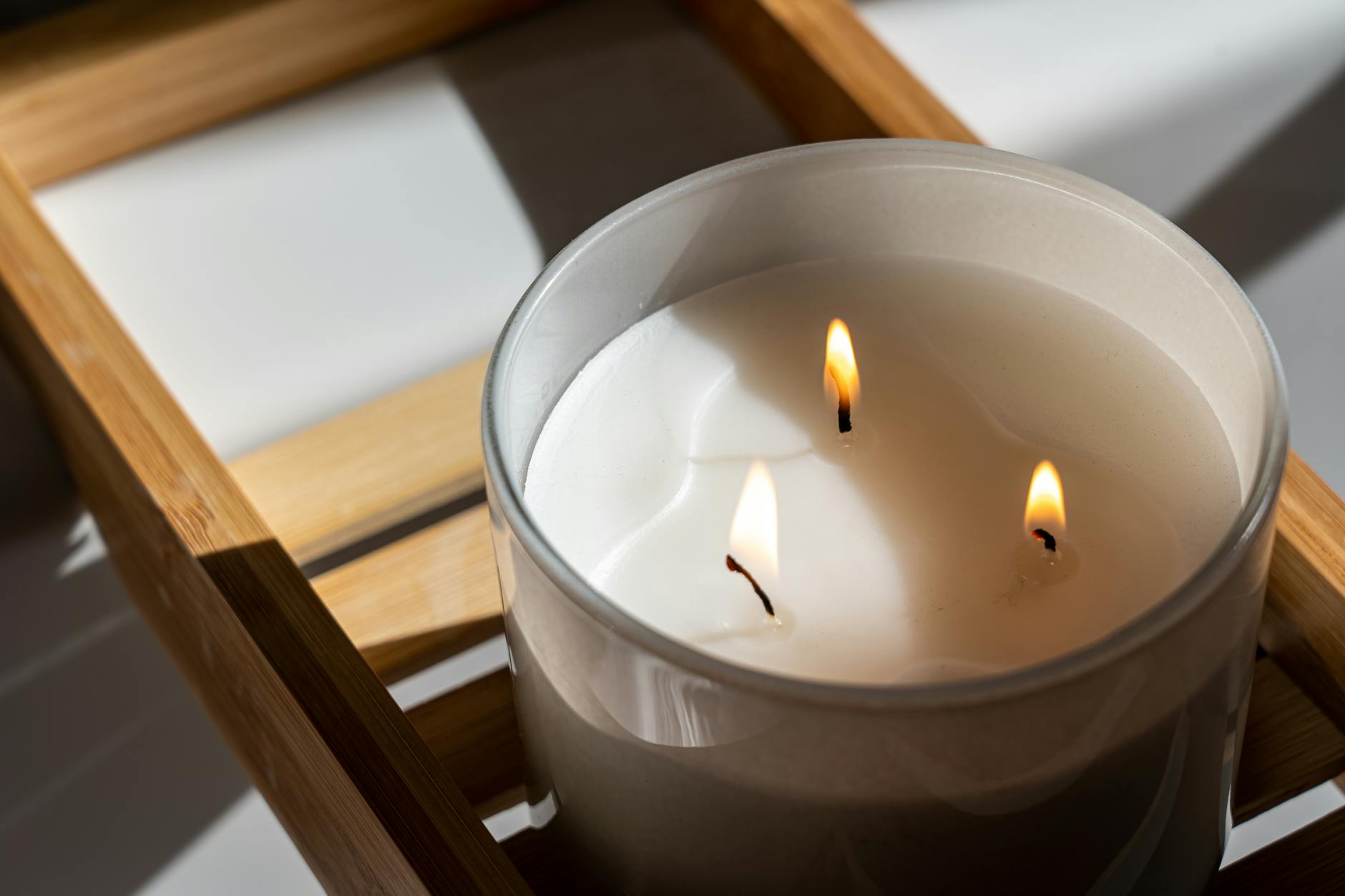
Hot throw is the scent released into the room once the candle is burning. This is what most people mean when they say their candle is not throwing scent. Hot throw depends on the fragrance oil reaching its flash point, the melt pool spreading fully across the surface, and the fragrance molecules dispersing efficiently into the air. If any one of these steps fails, you will notice weak or absent hot throw.
Fragrance Load: Are You Using Enough Scent?
The single most common reason for poor scent throw is simply not using enough fragrance oil. Many beginners follow vague instructions or guess, and the result is an under-fragranced candle.
Understanding Fragrance Load Percentages
Fragrance load refers to the percentage of fragrance oil relative to the weight of wax. Most waxes have a recommended maximum fragrance load, and working at or near that maximum is usually necessary for strong hot throw. Here are typical guidelines:
| Wax Type | Minimum Fragrance Load | Recommended Load | Maximum Load |
|---|---|---|---|
| Soy wax (container) | 6% | 8-10% | 10-12% |
| Paraffin wax | 6% | 8-10% | 12% |
| Coconut wax | 6% | 8-10% | 12% |
| Rapeseed wax | 6% | 7-9% | 10% |
| Beeswax | 3% | 4-6% | 6% |
| Paraffin/soy blend | 6% | 9-10% | 12% |
To calculate the correct amount of fragrance oil, weigh your wax in grams, then multiply by the fragrance load percentage. For example, 500g of soy wax at 10% fragrance load requires 50g of fragrance oil. Always use a digital kitchen scale accurate to at least 1g. Volume measurements with spoons are not reliable for candle making.
Why Natural Waxes Need Higher Loads
Natural waxes such as soy, rapeseed, and coconut tend to bind fragrance oil more tightly within their structure. Rapeseed wax in particular, which is popular in the UK because it is grown domestically and aligns with many customers’ preference for British-sourced ingredients, can hold scent differently to imported soy. You may find you need to push close to the recommended maximum fragrance load to achieve satisfying results. Suppliers such as Cosy Owl, The Candle Making Shop, and Supplies for Candles all provide wax-specific guidance and are worth consulting when switching wax types.
Fragrance Oil Quality and Suitability
Not all fragrance oils are created equal, and choosing the wrong one is a fast route to disappointment.
IFRA Compliance and UK Regulations
In the UK, candle fragrance oils must comply with guidelines set by the International Fragrance Association (IFRA) and, since the UK’s departure from the EU, are governed domestically by the UK REACH regulation administered by the Health and Safety Executive (HSE). Reputable UK suppliers will provide Safety Data Sheets (SDS) and IFRA certificates for every fragrance oil they sell. Cheap oils from unverified online marketplaces may not comply with these standards and often perform poorly in candles, either failing to throw scent or producing unpleasant odours when burned.
Always buy your fragrance oils from a dedicated candle-making supplier rather than a general craft shop or overseas marketplace. The UK fragrance oil market is well served by specialist retailers, and cutting corners here will undermine all your other efforts.
Flash Point and Burn Temperature
Every fragrance oil has a flash point – the temperature at which its vapours can ignite. This figure is listed on the SDS. For strong hot throw, your melt pool needs to be hot enough that the fragrance molecules evaporate freely. If a fragrance oil has a very high flash point and your candle’s melt pool never reaches that temperature, you will get weak or no scent throw. Most container candle waxes produce melt pool temperatures between 55°C and 75°C. Fragrance oils with flash points above 80°C may underperform in low-temperature waxes like soy. Check the flash point before purchasing, and if it is unusually high, test it in a wax that burns hotter, such as paraffin.
Fragrance Oils vs Essential Oils
Many beginners assume that natural essential oils will perform as well as fragrance oils in candles. In most cases, they do not. Essential oils are volatile at lower temperatures and often burn off before contributing to scent throw. They also carry higher safety risks when used at effective concentrations. If you wish to use essential oils, research each one carefully and keep concentrations conservative. For consistent scent throw, fragrance oils specifically formulated for candles are almost always the better choice.
Adding Fragrance at the Wrong Temperature
When and how you add fragrance oil to your wax has a significant effect on scent throw. This is one of the most frequently overlooked variables among beginners.
The Correct Temperature Window
Each wax type has an optimal temperature at which fragrance oil should be added. Adding fragrance when the wax is too hot causes the volatile scent molecules to evaporate before the candle is even poured, essentially burning off the scent you have paid for. Adding it when the wax is too cool may mean the fragrance does not bind properly to the wax, leading to separation or poor performance.
As a general rule, add fragrance oil when your melted wax has cooled to between 65°C and 70°C for most waxes. Some soy waxes perform best when fragrance is added closer to 60°C. Always use a thermometer – ideally a digital probe thermometer – and stir slowly but thoroughly for at least two full minutes. Stirring ensures the fragrance oil is evenly distributed throughout the wax rather than sitting in pockets.
Mixing Technique Matters
Stir in a slow, consistent pattern rather than whipping the mixture. Introducing too much air can cause bubbles and uneven distribution. Pour slowly and steadily once you have stirred, and try to maintain a consistent wax temperature throughout the pour. Draughts in your workspace – a common issue in older UK homes with poor insulation – can cause uneven cooling and affect how the fragrance sets within the wax.
Wick Size and Melt Pool Depth
A candle that does not throw scent is often a candle that does not burn correctly. The wick is the engine of your candle, and if it is too small, the melt pool will never develop properly.
Why a Full Melt Pool Is Essential
For strong hot throw, you need a full melt pool – a liquid layer of wax that extends from edge to edge of the container and reaches an adequate depth. The melt pool acts as the reservoir from which fragrance oil evaporates into the air. If the melt pool is shallow or incomplete, only a small amount of fragrance can escape at any time, and the room will barely register the scent.
A full melt pool typically takes between one and three hours to form, depending on the diameter of the container. As a rough guide, allow one hour per inch of container diameter. A candle in a 7cm diameter jar should achieve a full melt pool within approximately two to three hours. If yours does not, your wick is almost certainly too small.
Choosing the Right Wick
Wick sizing involves matching the wick to the container diameter, the wax type, and the fragrance load. Cotton wicks, wooden wicks, and braided wicks all behave differently, and there is no universal formula. The most reliable method is systematic wick testing: pour identical candles with different wick sizes, burn each one under the same conditions, and record your observations.
UK suppliers such as Wick For Candles and The Candle Making Shop stock a wide range of wick types with sizing guides. Many offer sample packs specifically for testing purposes. Keep a candle-making log noting the wax type, fragrance, pour temperature, wick size, container diameter, and burn performance. This documentation makes troubleshooting far more efficient over time.
Trimming Your Wick
Always trim your wick to approximately 5mm before each burn. A wick that is too long will produce a large, flickering flame that burns through the wax too quickly at the centre without spreading the melt pool evenly. It also produces more soot and may cause the fragrance to combust rather than evaporate gently. A proper wick trimmer is a worthwhile investment, though sharp nail scissors work well at the beginning.
Curing Time: The Step Most Beginners Skip
Patience is genuinely a functional requirement in candle making, not merely a virtue. Curing is the period after pouring during which the wax and fragrance oil bond together and the scent throw develops fully.
How Long Should You Cure?
Soy wax candles need a minimum of one week to cure, with many experienced makers recommending two weeks for optimal scent throw.