
Essential Equipment for Starting a Candle Business in the UK
Starting a candle business in the UK can be a practical way to turn a creative interest into a steady small business. Demand remains strong for home fragrance, gifting and handmade products, but success depends on more than a nice scent and an attractive label. The equipment you choose affects safety, product quality, consistency, production speed and profit margins. If you are working with candle making wax in the UK, it is especially important to understand how local suppliers, British safety expectations and UK labelling rules shape your setup.
Many beginners buy a few bits online, make a handful of test candles and then realise they need a better system. Wax overheats, jars crack, scent throw is weak or stock control becomes chaotic. A proper equipment list saves time and money from the start. It also helps you scale when orders increase.
This guide covers the essential equipment for starting a candle business in the UK, with a strong focus on wax selection and the tools needed to work with it properly. Whether you want to sell container candles at markets, through Etsy or on your own website, these are the core items worth getting right early on.
Understanding candle making wax in the UK
Before buying equipment, it helps to understand the main types of candle making wax available in the UK. Different waxes behave differently in production, so your wax choice affects the melting equipment, pouring process, testing routine and storage conditions you will need.
Soy wax
Soy wax is one of the most common choices for UK candle makers, particularly for container candles. It is popular because it is easy to work with, has a clean appearance and suits the handmade market. Many UK suppliers stock several soy blends, each with slightly different pour temperatures, adhesion and scent load recommendations.
If you choose soy wax, you will need accurate temperature control and patience during testing. Soy can be sensitive to room temperature and cooling conditions, so a thermometer and a stable workspace are essential.
Rapeseed wax
Rapeseed wax has become more popular in the UK because it is often marketed as a more local option than imported soy. Some blends are made specifically for British candle makers who want a smooth finish and a plant-based wax with good environmental appeal. Rapeseed blends can work very well in containers, but like soy, they require testing with your chosen fragrance oils and jars.
Paraffin wax
Paraffin wax still has its place, especially where strong scent throw and a reliable finish are priorities. It is often used in pillar candles, wax melts and some blended formulations. If you plan to use paraffin, you should be prepared for higher melt temperatures and clear safety procedures around heating and handling.
Coconut and blended waxes
Many UK suppliers offer coconut blends, soy-coconut blends and other mixed waxes. These are often designed to improve glass adhesion, surface appearance and scent performance. Blended waxes can make life easier for a new business, but they still need proper testing and consistent handling.
The key point is simple: your wax is not just an ingredient. It shapes the entire production setup. That is why the equipment below matters so much.
Wax melting equipment
Wax melter or double boiler setup
If you are making candles for sale, you need a safe and reliable way to melt wax. For very small batches, some beginners use a double boiler with a pouring jug inside a saucepan. This can work for testing, but it becomes slow and awkward once you start producing in volume.
A dedicated wax melter is usually a better investment for a business. In the UK, many candle suppliers sell electric wax melters in sizes suitable for micro businesses and growing workshops. These allow you to melt larger quantities of candle making wax evenly and maintain more consistent temperatures across batches.
When choosing a wax melter, look for:
- A capacity that matches your expected production volume
- Easy-pour control or a tap for cleaner filling
- Good temperature management
- Materials suitable for cosmetic or craft use
- Compatibility with the wax type you plan to use most often
For a side business making small runs of container candles, a sturdy pouring jug and double boiler may be enough at first. For regular weekly production, a proper melter can quickly pay for itself in saved time and reduced waste.
Pouring jugs
Even if you buy a larger melter, stainless steel or aluminium pouring jugs remain essential. They are useful for small test batches, colour separation, fragrance blending and controlled pouring into jars. It is worth having more than one, especially if you test several fragrances at once.
Temperature control tools
Thermometers
Temperature control is one of the biggest factors in candle quality. Wax that is too hot can damage fragrance performance, affect the finish and create unnecessary safety risks. Wax that is too cool may set poorly, trap air or give rough surfaces.
A digital thermometer is one of the most important low-cost purchases you can make. Infrared thermometers are convenient for quick readings, while probe thermometers can provide more direct checks in melted wax. Many candle makers use both.
In UK workshops, room temperature can change sharply through the year. A batch made in a warm summer studio may behave differently in a cold outbuilding in January. Monitoring temperature at every stage helps you build repeatable methods.
Scales
Digital scales are non-negotiable if you want consistent candles. Ingredients should be weighed, not guessed. You will need scales for:
- Wax quantities
- Fragrance oil measurement
- Dye measurement if you colour candles
- Finished product weight checks
Choose scales that measure accurately in grams, as most UK candle recipes and supplier guidance are based on metric measurements. It is helpful to have one larger scale for wax and a smaller high-precision scale for fragrance oils and additives.
Containers and moulds
Candle jars and tins
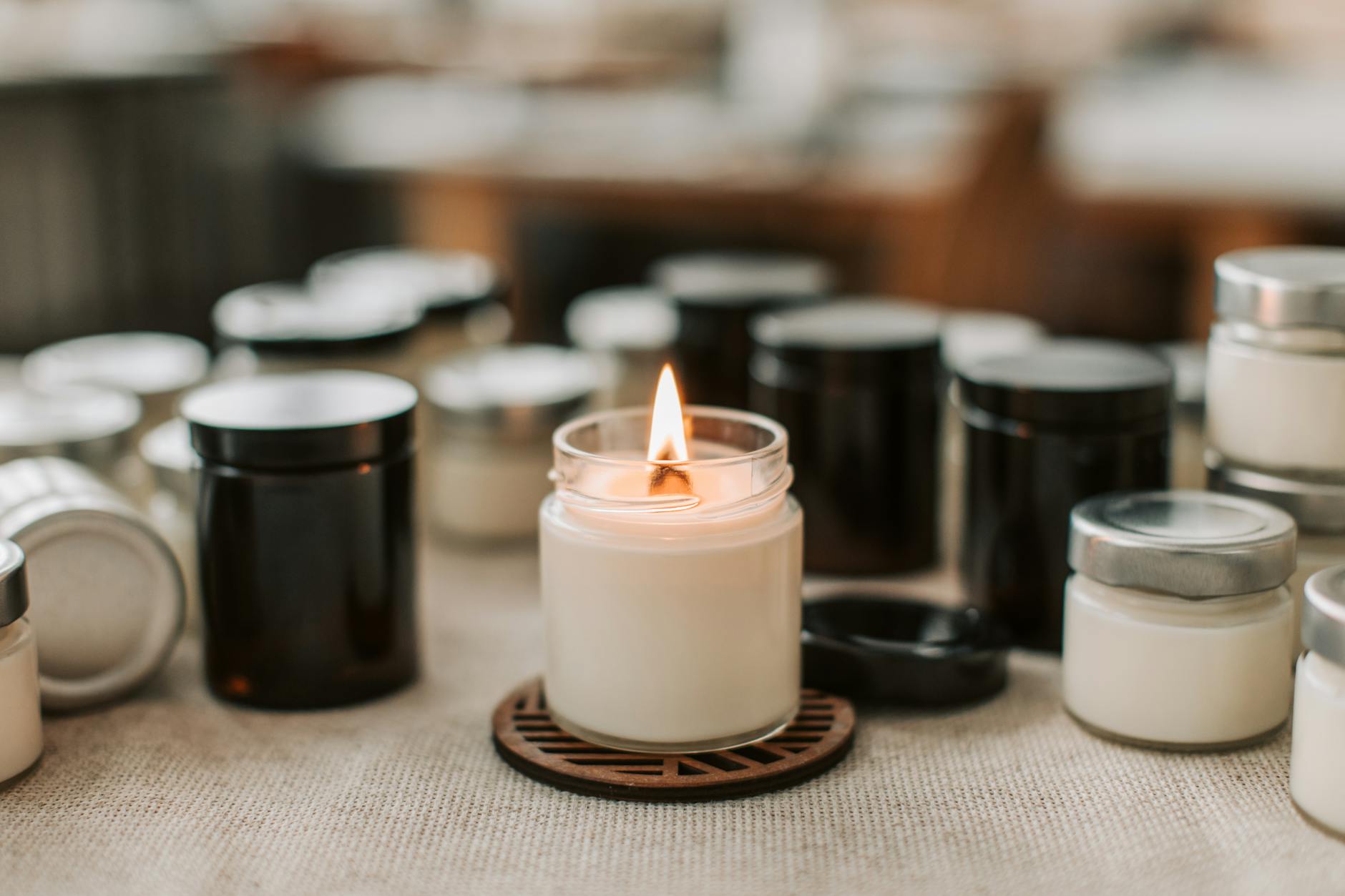
If you plan to sell container candles, your vessel choice becomes part of your brand. In the UK market, amber jars, clear glass tumblers, matte white jars and travel tins are all popular. The right container must be heat-safe, suitable for candle use and consistent in size.
Buying from a reputable UK supplier matters. Cheap imported jars can vary slightly in diameter or wall thickness, which affects wick performance and safety testing. Consistency is far more important than saving a few pence on each vessel.
When choosing jars or tins, think about:
- Internal diameter for wick selection
- Lid fit for storage and gifting
- Appearance in line with your target customer
- Pack size and supplier reliability
- Whether replacements will remain available long term
Moulds
If your business will include pillar candles, tealights, wax melts or decorative shapes, you will need moulds. Silicone moulds are common for detailed designs, while metal and polycarbonate moulds can suit more uniform products. Moulded candles often require different wax blends and wick choices from container candles, so they are not simply an add-on product. They need their own testing process and storage setup.
Wicks and wick-centering tools
Wicks
A good wick is just as important as good wax. In fact, the performance of candle making wax in the UK climate often depends on matching the wick to the specific wax, fragrance load and vessel width. A wick that works in one soy blend may fail in another. A fragrance-heavy candle may need a different wick from an unscented version of the same jar.
Keep a testing stock of several wick types and sizes. Popular options in the UK include cotton, paper-core, stabilised cotton and wooden wicks. Wooden wicks can look attractive and fit premium branding, but they usually need more testing and can be less forgiving.
Wick stickers, glue dots and sustainer tabs
You need a reliable way to secure wicks to the bottom of the container. Wick stickers and glue dots are common choices. Pre-tabbed wicks save time, especially for beginners, although some makers prefer to tab their own once production increases.
Wick centring tools
Wicks must stay centred while the wax sets. Wick bars, centring tools or simple holders prevent leaning wicks and uneven burns. This is a small item, but it has a big effect on the finished look of your candles and the consistency of your product.
Fragrance and mixing equipment
Fragrance oils
Fragrance is often what makes a candle sell, but it also adds complexity. UK candle businesses need to source fragrance oils suitable for candle use from reputable suppliers. The oil must perform well in your chosen wax and should come with the relevant documentation, including safety data where appropriate.
Do not assume a fragrance that smells strong in the bottle will throw well when burned. Testing is essential, and your equipment needs to support that testing properly.
Mixing tools
You will need heat-safe spatulas or stirrers for blending fragrance into melted wax. Stainless steel tools are easy to clean and durable. It is wise to have dedicated tools for candle making rather than reusing kitchen utensils.
If you work with multiple fragrances in one session, good organisation matters. Labelled jugs, a clean mixing area and a clear batch sheet reduce mistakes.
Workspace protection and safety equipment
Heat-resistant mats and surface protection
Candle making can be messy. Wax drips, fragrance spills and hot containers are part of the job. Protect your work surfaces with heat-resistant mats, trays or stainless steel tables. This is especially useful if you are starting at home and need to keep your workspace safe and manageable.
Protective clothing
At a minimum, wear an apron and closed shoes. Heat-resistant gloves can be helpful when moving hot jugs or handling freshly poured containers. Safety glasses may be sensible when working with large batches or high-temperature waxes.
Fire safety equipment
Any candle business should have basic fire safety equipment close by. That includes:
- A suitable fire extinguisher
- A fire blanket
- Clear ventilation
- A tidy workspace free from clutter near heat sources
Wax and fragrance oils must be handled with care. Good habits matter as much as good tools.
Testing and quality control equipment
Test burn supplies
If you sell candles in the UK, proper testing is not optional. You need to know how each candle burns, how long it lasts, how the container behaves and whether the wick remains safe throughout the burn cycle. For this, you need a test area and a simple but disciplined testing routine.
Useful quality control equipment includes:
- A timer or log for burn intervals
- A ruler for measuring melt pool depth
- A notebook or digital spreadsheet for recording results
- Labels for test batches
- A camera or phone for tracking visual changes
Testing should cover each wax, wick, fragrance and vessel combination. Even small changes can affect performance.
Batch records
You do not need complex factory software at the beginning, but you do need records. A simple system for noting wax type, fragrance percentage, wick used, pour temperature, cure time and test results will help you improve products and solve problems quickly.
Packaging equipment
Boxes and protective packing
Once your candles are made, they need to reach customers safely. In the UK, postal handling can be rough, especially during busy periods. Strong outer boxes, tissue paper, corrugated inserts and void fill all help protect jars and keep your products looking professional.
If you sell at markets, packaging also affects presentation. A well-fitted box can make a candle feel gift-ready and easier to transport.
Labels and printers
Labels are not just decorative. They support branding, product identification and compliance. You may choose to order labels from a UK print supplier or print some in-house for test products and short runs. A reliable label printer can be useful for batch labels, stock labels and temporary product runs.
Make sure your final packaging meets UK legal and safety requirements, particularly where allergen and CLP information is needed for fragranced products.
Cleaning and maintenance equipment
Cleaning is easy to underestimate when you start a candle business. Wax residue builds up quickly, fragrance transfer can spoil batches and untidy equipment slows production. Keep a stock of:
- Paper roll or lint-free cloths
- Heat-safe scrapers
- Cleaning products suitable for wax residue
- Bins for used wipes and damaged stock
- Storage tubs for clean tools and spare parts
Regular cleaning also protects fragrance clarity. A jug used for a strong spice oil can affect the next floral batch if it is not cleaned properly.
Storage equipment for wax and supplies
Candle making supplies need sensible storage, especially in the UK where damp, cold and summer heat can all create issues. Wax should be stored in a dry environment away from direct sunlight. Fragrance oils need secure, clearly labelled storage. Jars, lids and packaging should be protected from dust and damage.
Useful storage equipment includes shelving units, stackable containers, ingredient labels and stock rotation systems. Once your range grows beyond a few fragrances, proper storage makes day-to-day work much easier.
Business essentials beyond production
Insurance and documentation
While not physical equipment in the usual sense, public liability and product liability insurance are essential for a UK candle business. If you are selling at fairs, markets or wholesale, you will likely be asked for proof of cover. Keep digital and printed copies of your paperwork organised.
Computer, phone and admin tools
Orders, supplier invoices, label designs, compliance documents and customer messages all need managing. A dependable laptop or tablet, cloud storage and a simple bookkeeping setup are worth putting in place early. This side of the business is easy to neglect, but it matters just as much as your wax melter.
What to buy first if you are on a budget
You do not need a full workshop on day one. If your budget is limited, start with the equipment that gives you safe, repeatable results. A sensible starter setup for a UK candle business might include:
- A good quality container wax from a reputable UK supplier
- One or two stainless steel pouring jugs
- A digital thermometer
- Accurate digital scales
- A small range of jars or tins
- Several wick sizes for testing
- Wick stickers and centring tools
- A small selection of candle-safe fragrance oils
- Protective surface coverings
- Basic packaging and labels
Once you know your core products sell, you can invest in larger melters, more stock, better packaging and faster production tools.
Choosing UK suppliers carefully
The quality of your equipment is closely linked to the quality of your suppliers. When buying candle making wax in the UK, look for suppliers that offer clear product data, reliable stock levels and consistent batch quality. Read technical notes, recommended usage guidance and customer feedback. The cheapest option is rarely the best if it causes failed batches or constant retesting.
The same goes for jars, wicks and fragrance oils. A dependable UK supplier can make your production smoother and help you maintain consistency as your business grows.
Final thoughts
The best candle businesses are built on consistency. Beautiful branding helps, and so does a good fragrance selection, but none of that matters if your candles are unreliable or difficult to produce. The right equipment gives you control over every part of the process, from melting candle making wax to packing finished orders for customers across the UK.
If you are just starting out, keep your setup focused and practical. Invest first in safe heating, accurate measuring, proper testing tools and reliable containers. Learn how your chosen wax behaves, build records for every batch and avoid rushing into too many product types at once. A simple, well-organised setup is far more useful than a crowded workspace full of gadgets you do not yet need.
With solid equipment, careful testing and a clear understanding of how candle making wax works in UK conditions, you will be in a far stronger position to create candles that customers want to buy again and again.


https://shorturl.fm/aD366
https://shorturl.fm/F63c5
https://shorturl.fm/tSpX8
https://shorturl.fm/r45Eu
https://shorturl.fm/ZRlPk
https://shorturl.fm/fTU8g
https://shorturl.fm/AQ0Me
https://shorturl.fm/9SPYd
https://shorturl.fm/7P55U
https://shorturl.fm/VaCGv
https://shorturl.fm/4Lcjy
https://shorturl.fm/6JHMA
https://shorturl.fm/6XvGe
https://shorturl.fm/uwYwZ
https://shorturl.fm/KYaju
https://shorturl.fm/tFbhq
https://shorturl.fm/5hUfb
lugdzjnmjflmezwsqrtpjdxgezxqme
pmomtplpmpqfhnqzzsdtqluyziogvu