Coconut Wax vs Soy Wax: Which Is Better for UK Candle Makers?
Starting out in candle making is genuinely exciting. There is something deeply satisfying about pouring your first candle, watching it set, and then lighting it to fill a room with a fragrance you chose yourself. But before you get to that moment, you have a decision to make – and it is one that trips up almost every beginner: which wax should you actually use?
Walk into any UK craft supplier or browse online, and you will find a bewildering array of options. Paraffin, beeswax, rapeseed, palm, soy, coconut – the list goes on. Two waxes, however, tend to dominate the conversation in beginner candle making communities across Britain: soy wax and coconut wax. Both are natural, both are popular, and both have passionate supporters. Choosing between them is not always straightforward, but this guide will help you understand exactly what each one offers, where each one falls short, and how to decide which is right for your candles.
Do not worry if you feel a little overwhelmed right now. Every experienced candle maker in the UK started exactly where you are, standing in front of a laptop screen wondering what the difference between C3 and 464 soy wax actually means. By the end of this article, you will have a clear, practical understanding of both waxes – and the confidence to make your first purchase.
What Is Soy Wax?
Soy wax is made from hydrogenated soybean oil. It became widely available to hobbyist candle makers in the late 1990s and early 2000s as a natural alternative to paraffin, which is a petroleum by-product. Because soybeans are a renewable, agricultural crop, soy wax quickly gained a reputation as an environmentally friendlier choice, and that reputation has helped it become one of the most widely used candle waxes in the world.
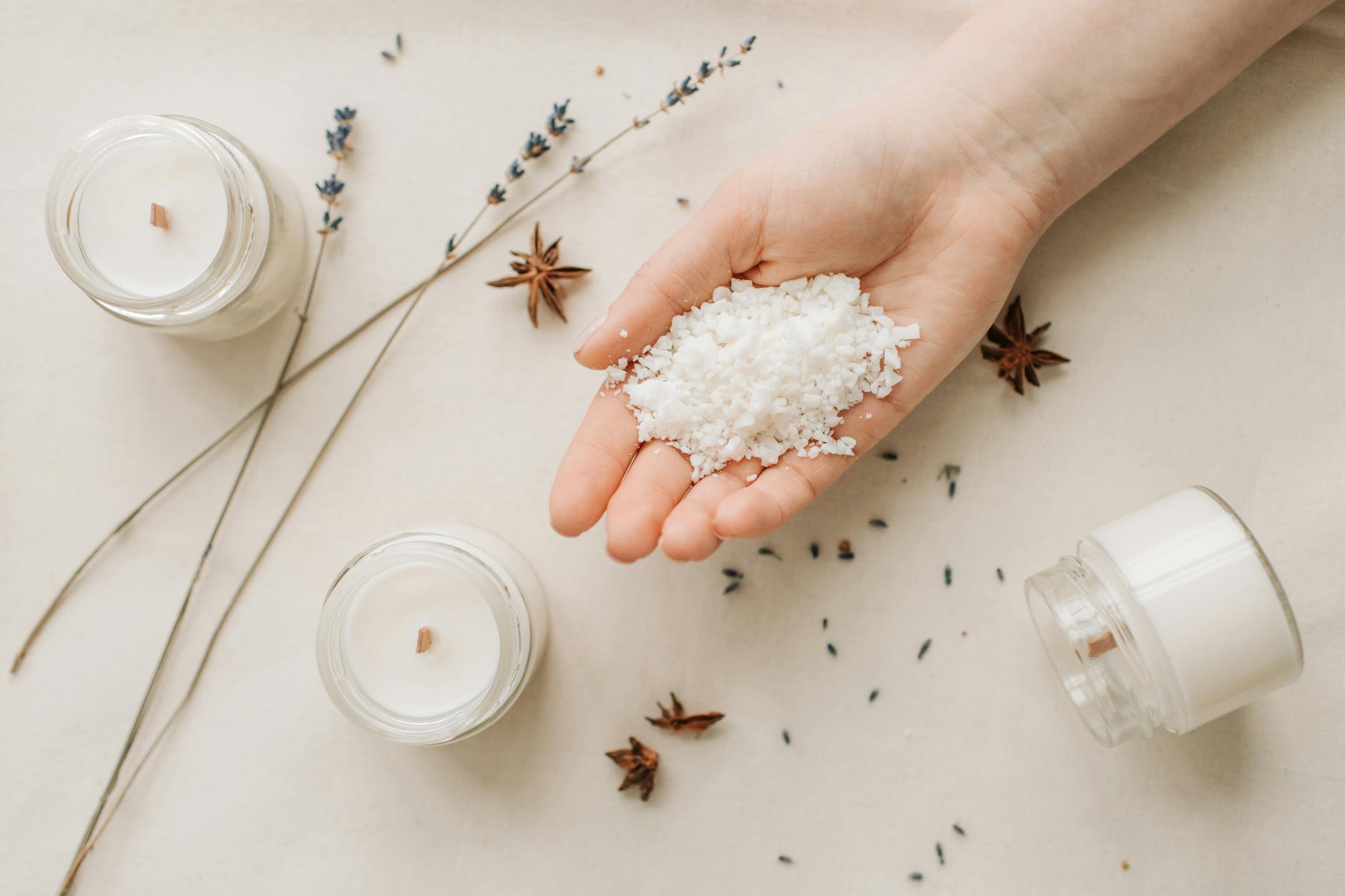
In the UK, soy wax is readily available from suppliers such as Candle Shack in Edinburgh, The Soap Kitchen based in Devon, and Naissance, which ships across Great Britain. You will typically find it sold in flake or pellet form, which makes it easy to measure and melt at home without specialist equipment. A standard kitchen thermometer, a pouring jug, and a double boiler setup on your hob are usually all you need to get started.
Soy wax has a relatively low melting point – usually between 46°C and 68°C depending on the specific grade – which means it is forgiving to work with on your first few attempts. It also tends to be cheaper than coconut wax, which is a significant factor when you are just learning and likely to make a few mistakes along the way. Nobody wants to waste expensive materials while they are still figuring out fragrance loads and wick sizing.
What Is Coconut Wax?
Coconut wax is derived from the cold-pressed oil of coconut meat, which is then hydrogenated to create a solid wax. It is a newer arrival to the candle making world compared to soy, and it carries a certain premium quality image that many makers find appealing. Coconut wax is naturally white, has an extremely smooth, creamy finish when set, and is considered by many to offer a superior scent throw – meaning the fragrance is released more powerfully and consistently when the candle burns.
In the UK, coconut wax is available from suppliers including Candle Shack, Cosy Owl (based in Kent), and various specialist importers. It tends to cost noticeably more than soy wax per kilogram, which is worth factoring in when you are calculating your costs as a beginner. It also has a slightly higher melting point than many soy waxes and can be more sensitive to temperature during pouring, which means there is a modest learning curve involved.
One thing worth noting is that pure coconut wax can be quite soft, which makes it better suited to container candles than freestanding pillar candles. Most coconut wax products sold for candle making are actually a blend – coconut wax combined with a small percentage of another wax, such as rapeseed or beeswax, to improve structure and performance. Always check the product description carefully when buying.
How Do They Compare? A Side-by-Side Look
Rather than discussing each wax in isolation, it helps to put them directly side by side. The table below covers the key areas that matter most to beginner candle makers in the UK.
| Feature | Soy Wax | Coconut Wax |
|---|---|---|
| Average UK Cost (per kg) | £3 – £6 | £7 – £14 |
| Scent Throw | Good, particularly hot throw; can vary by grade | Excellent; widely regarded as superior for both hot and cold throw |
| Appearance When Set | Can show frosting or sinkholes; rustic aesthetic | Smooth, creamy, bright white; very clean finish |
| Ease of Use for Beginners | Very beginner-friendly; widely documented online | Moderate; slightly more sensitive to temperature changes |
| Sustainability Credentials | Renewable crop; some concerns about land use and GMO crops | Renewable crop; lower yield per hectare but often considered more sustainable |
Neither wax wins outright across every category, and that is precisely the point. The best choice depends on your priorities, your budget, and the type of candles you want to make.
Scent Throw: Does It Really Make a Difference?
Scent throw is arguably the quality that candle buyers care about most. A candle that smells wonderful in the shop but barely fills a room when burning will disappoint customers and lead to negative reviews – which matters enormously if you ever plan to sell your candles at a UK craft fair or through an Etsy shop.
Coconut wax has a well-earned reputation for exceptional scent throw. Its molecular structure allows it to bind fragrance oils particularly well, and many makers report that coconut wax candles perform noticeably better at cold throw – that is, the fragrance you detect from an unlit candle – as well as during burning. For small-batch, premium candles aimed at the gift market, this can make a real difference to the finished product.
Soy wax, however, is no slouch. With the right fragrance load (typically between 8% and 10% by weight), a well-made soy candle can fill a medium-sized room beautifully. The key with soy is choosing a good-quality fragrance oil, using an appropriate wick, and giving the candle adequate curing time – usually 48 to 72 hours minimum – before testing it. Many UK makers have built successful businesses using soy wax exclusively, so do not let anyone convince you it is a second-rate option.
Appearance and Aesthetics
Here is where things get interesting from a visual standpoint. Soy wax has a charming, rustic quality that many makers and buyers genuinely love. It often develops a slightly matte, textured top after cooling, and it can produce a natural-looking frosting – a white, powdery coating that forms on the surface or sides of the candle. Some makers consider frosting a flaw; others embrace it as a sign that the wax is genuinely natural. If a perfect, flawless finish matters to you, soy wax may require more experimentation with pouring temperatures to achieve it consistently.
Coconut wax, by contrast, tends to produce a beautifully smooth, creamy white finish that looks professional straight out of the mould. For makers who want their candles to look pristine – particularly if you are photographing them for social media or selling at markets in places like Brighton, Bristol, or Edinburgh’s various independent craft events – the clean appearance of coconut wax can be a genuine advantage.
Working With Each Wax: Practical Considerations
Beyond the theory, there are real practical differences in how each wax behaves in your kitchen or craft room. Here is what you need to know before you start:
Working with Soy Wax – Key Steps
- Melt your soy wax flakes slowly using a double boiler or a dedicated wax melting pot. Aim for a melt temperature of around 75°C-80°C.
- Remove from heat and allow the wax to cool to approximately 60°C-65°C before adding your fragrance oil. Adding fragrance when the wax is too hot can cause the scent to burn off.
- Stir gently but thoroughly for at least two minutes to ensure the fragrance is fully incorporated.
- Allow the wax to cool a little further – around 55°C-60°C – before pouring into your pre-warmed container.
- Leave to set at room temperature. Avoid moving the candles whilst they are setting, and keep them away from draughts.
- Allow a full cure time of at least 48 hours before doing a burn test. Soy candles continue to improve with longer cure times of up to two weeks.
Working with Coconut Wax – Key Steps
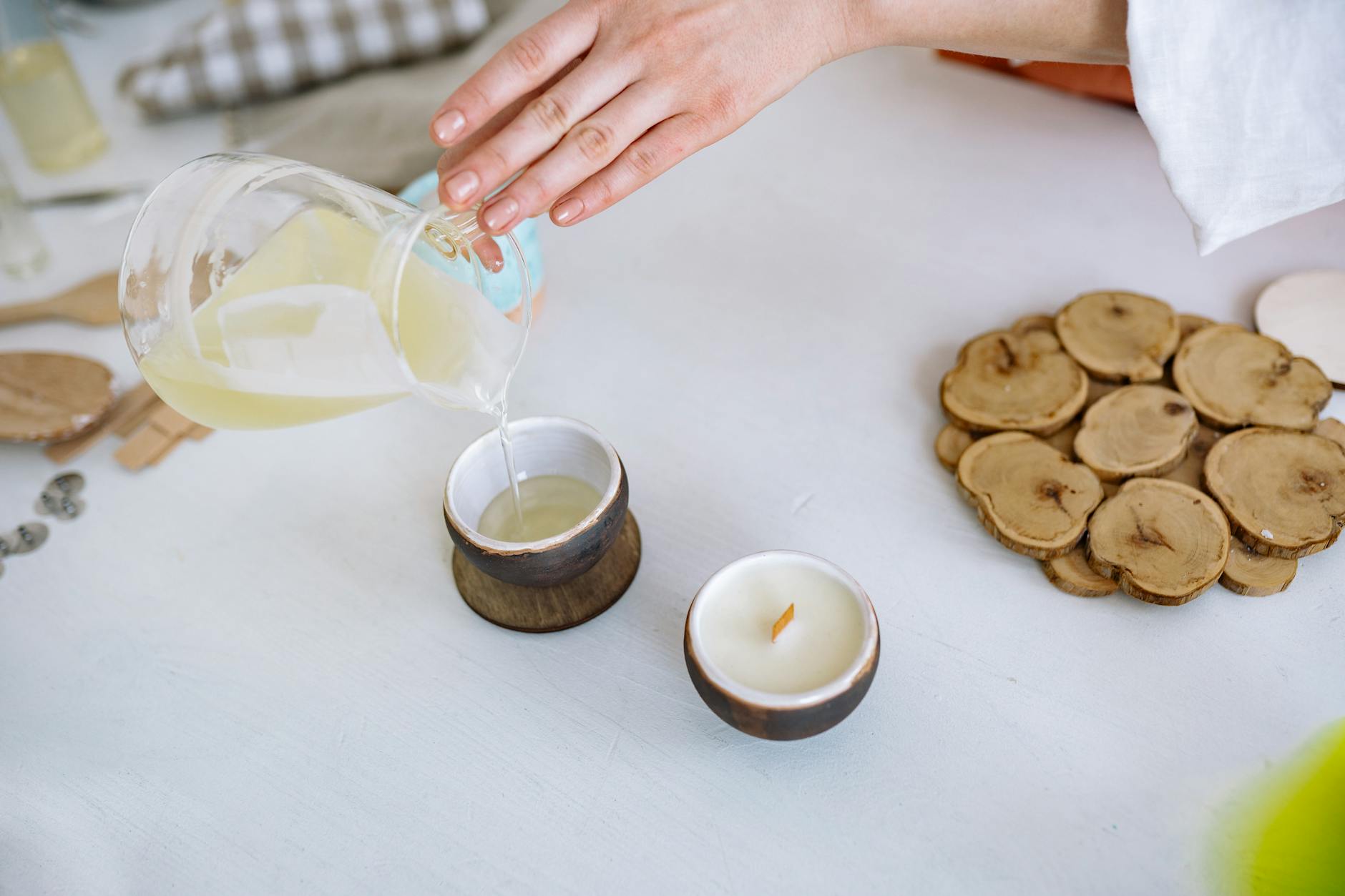
- Melt your coconut wax carefully – it can be sensitive to overheating. Aim for a melt temperature of around 65°C-75°C, though this varies by product, so always check your supplier’s guidelines.
- Add fragrance oil once the wax has cooled slightly, typically around 60°C. Stir thoroughly and consistently for two to three minutes.
- Pour at a slightly lower temperature than soy – around 50°C-55°C – to achieve the smoothest possible finish.
- Coconut wax can be more sensitive to ambient room temperature. Try to pour in a warm room (above 18°C) and avoid pouring in cold or draughty conditions, which is a real consideration during British winters.
- Allow a full cure of at least 48-72 hours. Coconut wax often benefits from an even longer cure of five to seven days for optimum
One of the most common questions UK candle makers ask is which wax actually performs better when it comes to fragrance. Soy wax typically holds a fragrance load of around 6–10%, though some suppliers recommend staying closer to 6–8% for best results. Coconut wax, by contrast, can hold a higher fragrance load — often up to 10–12% — and many makers find that it releases scent more evenly throughout the burn. This is partly due to coconut wax’s lower melt point and softer composition, which allows fragrance oils to disperse more readily into the surrounding air. For UK makers working with complex or delicate fragrance blends, coconut wax can give a noticeably more consistent cold throw as well as a strong hot throw once the candle is lit.
That said, soy wax is no slouch. A well-made soy candle with a correctly sized wick and a quality fragrance oil can perform beautifully. The key with soy is patience — rushing the cure or under-wicking are the two most common culprits behind a disappointing scent throw, and both are entirely avoidable with a little testing and discipline. It is also worth noting that UK fragrance oils vary considerably between suppliers, and the wax you choose should always be tested with the specific fragrance you plan to use. No amount of general advice substitutes for your own wick and fragrance testing in your chosen vessel.
Cost and Sourcing in the UK
Cost is a practical reality for any candle business or serious hobbyist. Soy wax remains the more affordable option across most UK suppliers, with prices typically lower per kilogram than coconut wax. Coconut wax commands a premium, which reflects both the cost of the raw material and the more involved processing required to produce a refined, cosmetic-grade wax suitable for container candles. For small-batch makers or those just starting out, this price difference can add up quickly, particularly when you factor in testing batches, fragrance oils, wicks, and vessels. However, if you are selling finished candles at a premium price point, the added cost of coconut wax may be justifiable — and even marketable — given consumer interest in natural, sustainable ingredients.
Both waxes are now reasonably well stocked across UK suppliers, though availability can vary. Soy wax is widely available from a broad range of domestic suppliers with reliable lead times. Coconut wax, whilst increasingly common, may require ordering from more specialist suppliers, and stock can occasionally be limited. If you are building a candle business with consistent production needs, it is worth establishing a reliable supply chain for whichever wax you choose, and keeping a buffer stock to avoid disruption.
Conclusion: Which Should You Choose?
There is no single correct answer to the soy versus coconut debate — the right choice depends on your priorities, your budget, and the type of candles you want to make. Soy wax is an excellent all-round option: affordable, widely available, beginner-friendly, and capable of producing beautiful candles with proper technique and patience. Coconut wax offers a smoother aesthetic, a superior scent throw in many cases, and a genuinely premium feel, but it comes at a higher cost and requires a little more care during pouring. For many UK makers, the ideal solution may actually be a coconut-soy blend, which combines the workability and cost-efficiency of soy with the enhanced scent performance and finish of coconut. Whichever wax you choose, consistent testing, careful wick selection, and attention to your working environment will always matter more than the wax alone.