Cotton Wicks vs Wood Wicks: A Comparison for Beginners
When you start making candles at home in the UK, one of the first decisions you will face is choosing between cotton wicks and wood wicks. It sounds straightforward enough, but this single choice affects everything: how your candle burns, how it smells, how it looks in the jar, and how safe it is to use. Both wick types have genuine strengths and real limitations, and neither is universally better than the other. What matters is understanding how each one behaves and matching it to the wax, fragrance, and container you are working with.
This guide walks through both options in detail – covering burn performance, fragrance throw, ease of use, sourcing in the UK, and safety considerations – so you can make an informed choice from your very first batch.
Understanding What a Wick Actually Does
Before comparing the two types, it helps to understand what a wick is doing inside a candle. The wick is not simply something that holds a flame. It acts as a fuel delivery system, drawing liquid wax upward through capillary action so that the flame can vaporise and burn it. If the wick is too small for the diameter of your container, it will not generate enough heat to melt the wax pool all the way to the edges, leaving a tunnel of unburnt wax down the centre. If it is too large, it burns too hot, producing soot, a large flame, and potentially cracking your jar or releasing fragrance oil too rapidly.
Getting the wick right is often described by experienced chandlers as the most technical part of candle making – and it is genuinely worth taking seriously, particularly if you intend to sell your candles, which brings its own set of UK regulatory requirements.
Cotton Wicks: The Traditional Choice
Cotton wicks have been used in candle making for centuries, and they remain the most widely used wick type globally. In their modern form, they are typically made from braided or twisted cotton fibres, often treated with a stiffening agent to help them stand upright in the melt pool. Many cotton wicks sold in the UK are also pre-tabbed, meaning they come with a small metal sustainer tab at the base that holds the wick in position at the bottom of the jar.
Types of Cotton Wick
Cotton wicks are not a single product. There are several distinct constructions available, and each behaves differently:
- Flat braided wicks – The most common type, used in pillar candles and container candles alike. They curl slightly as they burn, which self-trims the tip and reduces mushrooming.
- Square braided wicks – Slightly more robust than flat braided wicks, with a rounder cross-section. These are particularly well-suited to beeswax and other dense waxes.
- Paper core wicks – Cotton wicks with a thin paper core for extra rigidity. A good choice for softer waxes like soy, where floppy wicks can be an issue.
- CD and ECO series wicks – Proprietary wick series developed by companies such as Wedo and Coreless. These are engineered to work with specific wax types and are widely available from UK suppliers like Candle Shack, The Fragrance Shop trade arm, and Cosy Owl.
How Cotton Wicks Perform
In most standard container candles – particularly those made with soy wax or coconut-soy blends, which are currently among the most popular choices for UK home crafters – cotton wicks perform reliably. A correctly sized cotton wick will produce a steady, medium-height flame, a clean full melt pool across the diameter of the jar, and minimal soot. The flame is relatively quiet and consistent, which many customers associate with quality.
Cotton wicks also tend to be more forgiving across a wider range of fragrance loads. If you are using a fragrance oil at around 8-10% (a typical load for soy wax), a well-chosen cotton wick will handle it without becoming blocked or producing excessive carbon build-up on the tip. That said, cotton wicks do mushroom – meaning a small carbon deposit forms at the tip after prolonged burning. This is normal, but it does mean the wick should be trimmed to approximately 5mm before each use, a point worth noting on your candle’s care card.
Advantages of Cotton Wicks
- Widely available from UK suppliers in large variety packs
- Lower cost per unit, especially when bought in bulk
- Compatible with a broad range of wax types
- Easier to size reliably using established wick charts
- Good fragrance throw when properly sized
- Clean burn with minimal soot when trimmed correctly
- Suitable for beginner testing and wick trialling
Disadvantages of Cotton Wicks
- Require trimming before each burn
- Can mushroom with high fragrance loads
- Lack the visual and sensory distinctiveness of wood wicks
- Can become floppy during pouring in soft waxes if not properly supported
Wood Wicks: The Modern Alternative
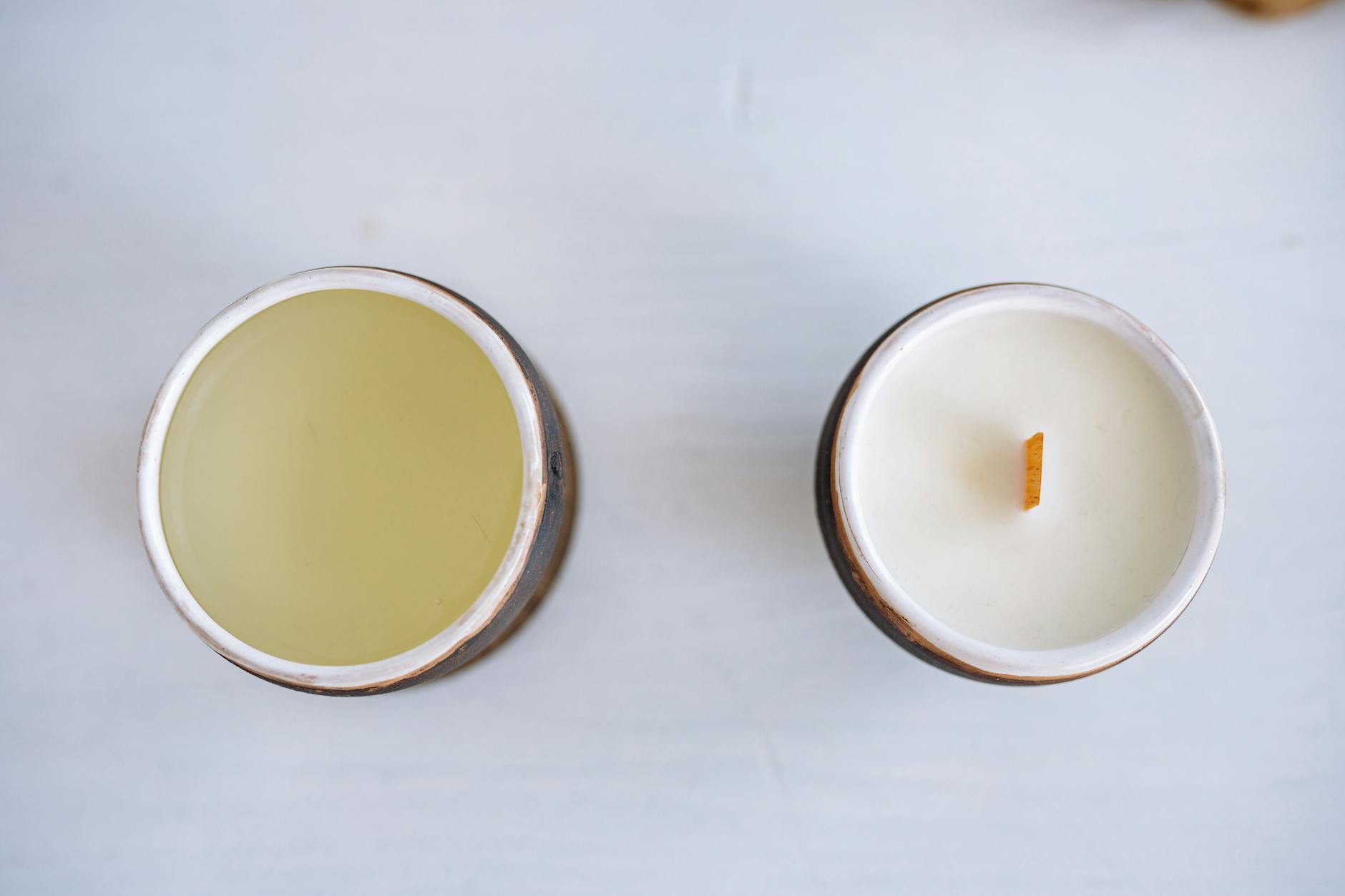
Wood wicks rose to prominence in the UK craft candle market during the early 2010s and have remained popular ever since. They are typically made from thin strips of FSC-certified wood – most commonly cherry, maple, or a softwood blend – and produce a distinctive crackling sound as they burn. That gentle crackle, reminiscent of an open fire, is the primary sensory appeal of wood wicks and a significant selling point for premium candle brands.
In recent years, booster wood wicks – which consist of two thin strips of wood sandwiched together – have become more common. These produce a more vigorous crackle and a slightly larger flame, and they tend to perform better in denser waxes.
How Wood Wicks Perform
Wood wicks burn differently to cotton wicks in ways that matter practically. The flame from a wood wick is typically wider and lower, resembling a small campfire flame rather than the upright teardrop of a cotton wick. This wider flame produces lateral heat distribution across the surface of the wax, which can help achieve a full melt pool more efficiently – particularly useful in wider containers of 8cm diameter or more.
One important characteristic of wood wicks is that they tend to perform best with softer waxes. They can struggle to draw fuel efficiently through denser waxes like paraffin or hard beeswax blends, which can cause the flame to extinguish unexpectedly – a frustrating result known as self-extinguishing. For this reason, wood wicks are most commonly paired with coconut wax, soy wax, or coconut-apricot wax blends, all of which are soft enough to allow good capillary action.
Fragrance throw with wood wicks can be excellent, especially for hot throw (the scent released while the candle is burning). The wide, lateral flame generates consistent surface heat across the melt pool, releasing fragrance oil effectively. However, cold throw – the scent a candle releases when unlit – is not affected by wick type at all, being determined instead by fragrance load, wax type, and cure time.
Advantages of Wood Wicks
- Distinctive crackling sound – a major selling point for premium and gift candles
- Aesthetically attractive in clear glass containers
- Wide, lateral flame produces good surface heat distribution
- Minimal mushrooming compared to cotton wicks
- Work very well with soft waxes (soy, coconut, coconut-apricot)
- Less need for trimming, though occasional light maintenance is still recommended
Disadvantages of Wood Wicks
- Can self-extinguish in dense or heavily fragranced waxes
- More difficult to size correctly – fewer standardised wick charts exist
- Higher cost per unit than equivalent cotton wicks
- More sensitive to fragrance load – some fragrance oils clog wood wicks
- Require careful lighting technique (hold flame along the length, not just at the tip)
- The crackling sound, while appealing to many, is not universally preferred
Wick Sizing: The Most Important Step for Either Type
Regardless of which wick you choose, sizing is critical. There is no universal answer to “which wick should I use in a 7cm jar” because the correct answer depends on your specific wax, fragrance oil, fragrance load percentage, and even the ambient temperature of your workspace. This is why wick testing – making small test candles with different wick sizes and burning them under controlled conditions – is an essential part of the candle making process.
Here is a practical wick testing process for beginners:
- Choose three candidate wicks – For a given container, select a wick size you think is correct plus one size smaller and one size larger.
- Make three identical test candles – Use the same wax, fragrance oil, fragrance load, and pour temperature for all three. Label them clearly.
- Allow a full cure – Soy wax candles benefit from a 48-hour minimum cure before testing; some chandlers recommend up to two weeks for a fully developed fragrance throw.
- Burn for four hours on the first test – This simulates a real-world usage session. Observe the flame height (ideally 2-3cm), melt pool depth (should reach the edges within 2-3 hours), and any soot or mushrooming.
- Allow the candle to cool fully and trim the wick – Trim to 5mm for cotton, or brush away any ash on a wood wick.
- Burn for a second and third session – Candle performance often changes across multiple burns as the fragrance load in the wax changes.
- Record your results – Note flame height, melt pool behaviour, scent strength, and any issues. This creates a reference document you can use for future batches.
UK suppliers including Candle Shack (based in Glasgow), Cosy Owl, and
When comparing cotton and wood wicks side by side, neither is objectively superior — the right choice depends on what you are trying to achieve. Cotton wicks are more forgiving for beginners, offer a wider range of sizing options, and are generally easier to source at low cost. Wood wicks, by contrast, deliver a more distinctive aesthetic and a soft crackling sound that many customers associate with premium candles. If you are making candles for personal use or early-stage testing, cotton wicks are the sensible starting point. If you are developing a product with a particular look or feel in mind, wood wicks may be worth the additional testing effort.
It is also worth noting that your choice of wick is only one variable among many. Wax type, fragrance load, vessel diameter, pouring temperature, and curing time all interact with wick performance. A wick that works well in a soy wax container candle may perform poorly in a paraffin blend or a coconut-apricot wax, even if all other conditions appear identical. Treat your wick selection as part of a broader process of formulation rather than an isolated decision, and keep detailed records at every stage so that successful results can be replicated accurately.
Whichever wick type you choose, consistent testing and careful observation are what separate a reliable candle from an unpredictable one. Both cotton and wood wicks are capable of producing excellent results in the right conditions, and many experienced chandlers use both depending on the product range they are making. Start with a single wick type, work methodically through your testing process, and refine your formula before scaling up. Building that foundation of reliable data early on will save considerable time, material costs, and frustration as your candle making practice develops.