
How to Make Pillar Candles at Home
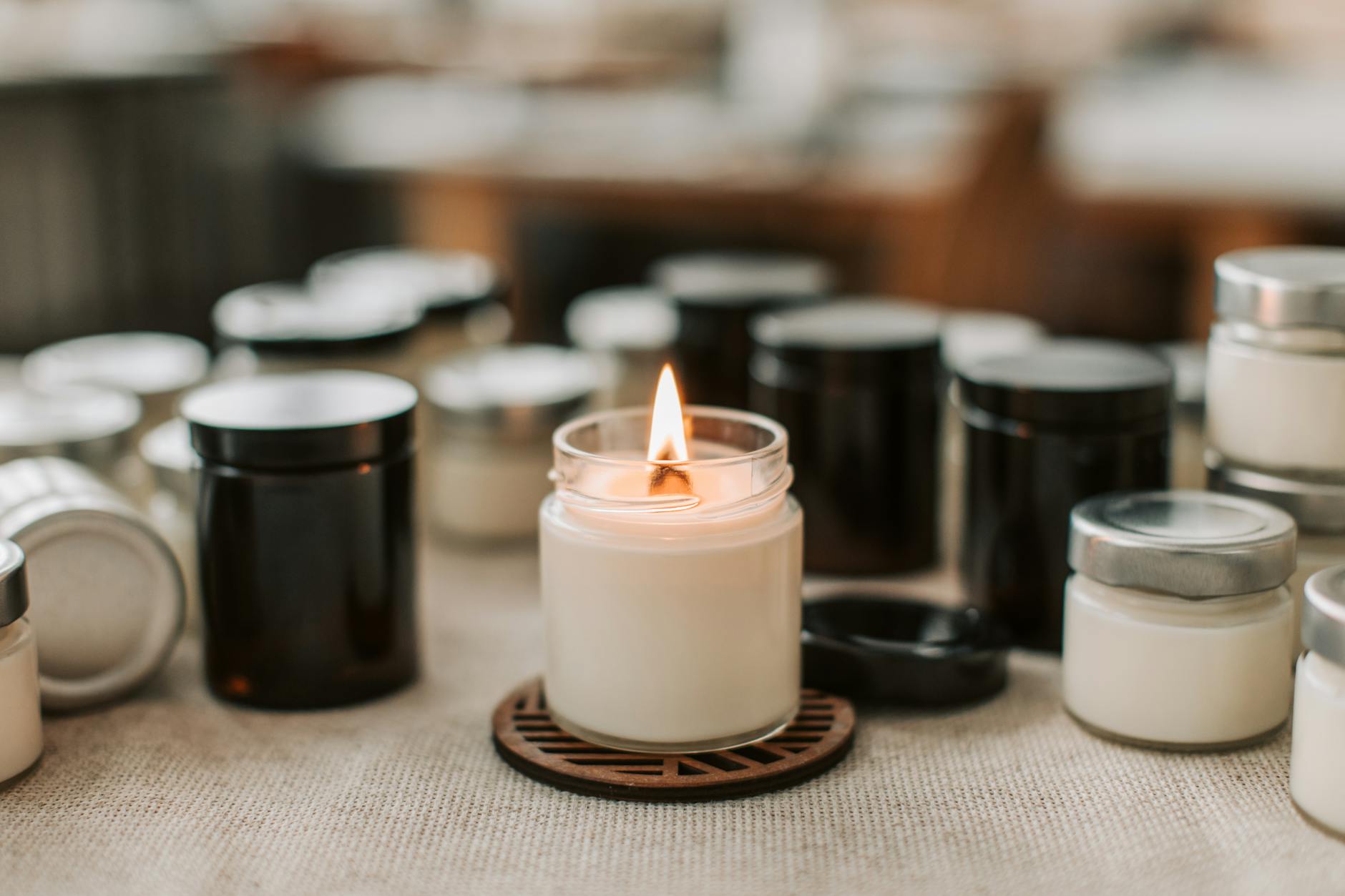
Pillar candles are one of the most satisfying things you can make at home. They stand on their own without a container, they look impressive on a dining table or mantelpiece, and once you understand the basics, you can experiment endlessly with colours, scents, and sizes. The process is not complicated, but it does require the right materials — and in the UK, you have excellent access to quality candle making wax and supplies without needing to import anything from abroad.
This guide walks you through everything you need to know, from choosing your wax to pouring your first pillar and troubleshooting the issues that catch beginners out.
Why Pillar Candles Require a Specific Type of Wax
Not all candle wax is the same, and this catches a lot of beginners off guard. If you have ever tried pouring a soft container wax into a pillar mould and ended up with a candle that slumps, bends, or collapses at room temperature, you already know this lesson the hard way.
Pillar candles need a harder wax with a higher melt point. The wax must hold its shape without any surrounding vessel to support it, which means it needs enough structural integrity to stand upright through warm summer rooms, direct sunlight near a windowsill, and the general warmth of everyday indoor life.
Here is a breakdown of the main wax types available in the UK and how they perform for pillar candles:
Paraffin Wax
Traditional paraffin wax remains the most widely used wax for pillar candles in the UK. It is affordable, easy to source from suppliers like Candle Shack, The Candle Making Shop, and Supplies for Candles, and it produces clean, hard pillars with excellent scent throw. For pillar work, you want a fully refined paraffin with a melt point of around 58°C to 64°C. Anything softer will not hold its shape reliably.
One common approach is blending paraffin with a small amount of microcrystalline wax or a hardening additive. Microcrystalline wax — often sold in flake or pellet form — increases hardness and flexibility simultaneously, which reduces cracking. Many experienced UK candlemakers use a blend of roughly 95% paraffin and 5% microcrystalline wax as their standard pillar recipe.
Granulated Paraffin
Some UK suppliers sell granulated paraffin specifically designed for chunk or pressed candles. This is a different use case to poured pillars, but worth knowing about if you want to make rustic, textured candles later on.
Beeswax
British beeswax is a beautiful material for pillar candles. It burns slowly and cleanly, has a naturally warm honey scent, and produces a lovely golden or ivory finish depending on how refined it is. The downside is cost — natural UK beeswax is considerably more expensive than paraffin, and it can be challenging to wick correctly because of its density. That said, if you are making candles as gifts or for personal use and you want a natural, premium product, beeswax pillars are hard to beat.
Pure beeswax has a melt point of around 62°C to 65°C, which makes it naturally suited to pillar work. You do not need to add hardeners.
Coconut Wax Blends
Pure coconut wax is far too soft for freestanding pillar candles on its own. However, some UK suppliers now sell coconut-paraffin blends or coconut-beeswax blends that are formulated specifically for pillars. These can give you a more natural product profile while maintaining structural stability. They tend to cost more than straight paraffin, and scent throw can vary, so always test before committing to a large batch.
Soy Wax for Pillars
This is a common question from beginners, particularly those who have seen soy wax marketed as a natural, eco-friendly option. The honest answer is that standard soy wax — such as Golden Brands 464 or similar container soy waxes — is not suitable for freestanding pillar candles. It is simply too soft. There are soy-paraffin pillar blends available, and some suppliers sell a harder soy wax specifically developed for pillars, but even these can struggle in warm conditions. If a natural wax is important to you and you want reliable results, beeswax is a more dependable choice for pillars than soy.
Equipment You Will Need
Before you begin, gather everything in advance. Candle making involves working with hot wax, and having to search for something mid-pour is how accidents happen.
- A double boiler or a dedicated wax melting jug placed in a pan of simmering water
- A digital thermometer — do not guess temperatures
- Pillar moulds — metal, polycarbonate, or silicone
- Mould seal putty or Blu Tack to seal the wick hole
- Pre-waxed and primed wicks — sized appropriately for your mould diameter
- A wick centering tool or two pencils taped together
- Scales accurate to at least 1 gram
- Fragrance oil rated for use in candles (not essential oil alone for large pillars)
- Candle dye — blocks, chips, or liquid dye
- A heat gun or craft skewer for dealing with sinkholes
- Newspaper or a silicone mat to protect your work surface
Choosing Your Moulds
In the UK, pillar moulds are widely available from candle supply shops online. The most common options are:
Metal Moulds
Aluminium pillar moulds are durable, long-lasting, and produce very smooth-sided candles. They are the standard choice for cylindrical pillars. The wax contracts slightly as it cools, which makes demoulding relatively straightforward once the candle is fully set. Metal moulds are a solid investment if you plan to make pillar candles regularly.
Polycarbonate Moulds
These are rigid clear plastic moulds, often used for more decorative or unusual pillar shapes. They give you excellent visibility so you can watch the wax set. They are slightly more fragile than metal and need careful handling to avoid cracking, but they produce a beautiful surface finish.
Silicone Moulds
Silicone moulds are flexible, which makes demoulding very easy — you simply peel the mould away from the set candle. They come in an enormous range of shapes, from geometric prisms to novelty designs. The downside is that very soft silicone can distort slightly during pouring if not supported, so rest them in a box or container of sand or rice to hold their shape while the wax sets.
Wicking a Pillar Candle Correctly
Wicking is where most pillar candle problems originate. Too small a wick and your candle will tunnel down the centre, leaving thick walls of unburned wax. Too large a wick and you get an oversized flame, excessive soot, and a candle that burns through far too quickly.
For pillar candles, the wick goes in from the bottom of the mould (which becomes the top of the finished candle). Thread your wick through the wick hole at the base, leave a few centimetres of excess poking out, and seal the hole with mould seal putty. Pull the wick taut at the open top of the mould and secure it with a wick bar or two pencils.
Wick sizing depends on the diameter of your pillar and the wax you are using. As a general starting point for paraffin pillars:
- Up to 6 cm diameter: a medium cotton or ECO wick in the 6–8 range
- 6–8 cm diameter: a larger ECO or CD wick
- Over 8 cm diameter: consider double wicking
These are starting points only. Always burn-test before selling or gifting candles. Burn for two hours on the first light and check the melt pool diameter, flame height, and soot production. Adjust your wick accordingly on subsequent test batches.
Step-by-Step: Pouring Your Pillar Candle
Step 1 — Weigh Your Wax
Calculate how much wax you need by filling your mould with water, then weighing the water. Wax is slightly lighter than water, so multiply the water weight in grams by 0.9 to get an approximate wax weight. Weigh your wax out on your scales before melting.
Step 2 — Melt Your Wax
Place your wax in the top of your double boiler and melt it slowly over simmering water. Keep a close eye on the temperature. For most pillar paraffin waxes, you want to heat to around 75°C to 80°C — just enough to melt fully with a margin for adding fragrance. Never leave melting wax unattended, and never use a direct open flame to melt wax.
Step 3 — Add Dye and Fragrance
Once your wax is fully melted and up to temperature, add your dye first. Stir thoroughly until completely dissolved. Then add your fragrance oil at the recommended usage rate — typically 6% to 10% of the wax weight for most pillar paraffin blends, though always follow the supplier’s specific guidance. Stir gently for at least two minutes to ensure the fragrance is fully incorporated.
Note that fragrance oils can lower the melt point of your wax slightly, which is one reason not to exceed recommended usage rates in pillar candles. Too much fragrance oil can make your pillar softer and more prone to sweating.
Step 4 — Allow to Cool Before Pouring
This is one of the most important steps. Do not pour at maximum temperature. Allow the wax to cool to around 65°C to 70°C before pouring into your mould. Pouring too hot causes excessive shrinkage, poor adhesion to wick sustainers, and increased likelihood of sinkholes. A digital thermometer is essential here.
Step 5 — Pour Slowly
Pour in a slow, steady stream down the side of the mould rather than directly onto the wick. This reduces air bubbles. Fill to about 1 cm below the top of the mould and leave to set at room temperature. Do not move the mould or place it in a cold environment to speed setting — this causes uneven cooling and cracking.
Step 6 — Top Up the Sinkhole
As the wax cools, it contracts and almost always forms a sinkhole or depression
Whether you are just starting out or looking to develop your skills further, the key is to keep practising and enjoy the process. Every expert was once a beginner, and with the right approach and a bit of patience, you will find yourself making real progress.

https://shorturl.fm/mkHAi
https://shorturl.fm/emN6I
Последние новинки музыки 2026 скачать бесплатно https://shorturl.fm/naLA6
https://shorturl.fm/C0Ave
https://shorturl.fm/d5e4T
https://shorturl.fm/Akgn6
https://shorturl.fm/MoytT
https://shorturl.fm/Xz3i5
https://shorturl.fm/Blw14
https://shorturl.fm/S2O9U
https://shorturl.fm/gBZnQ
https://shorturl.fm/vRkXq
https://shorturl.fm/SmnpA
https://addlinks.pro/63lEQ