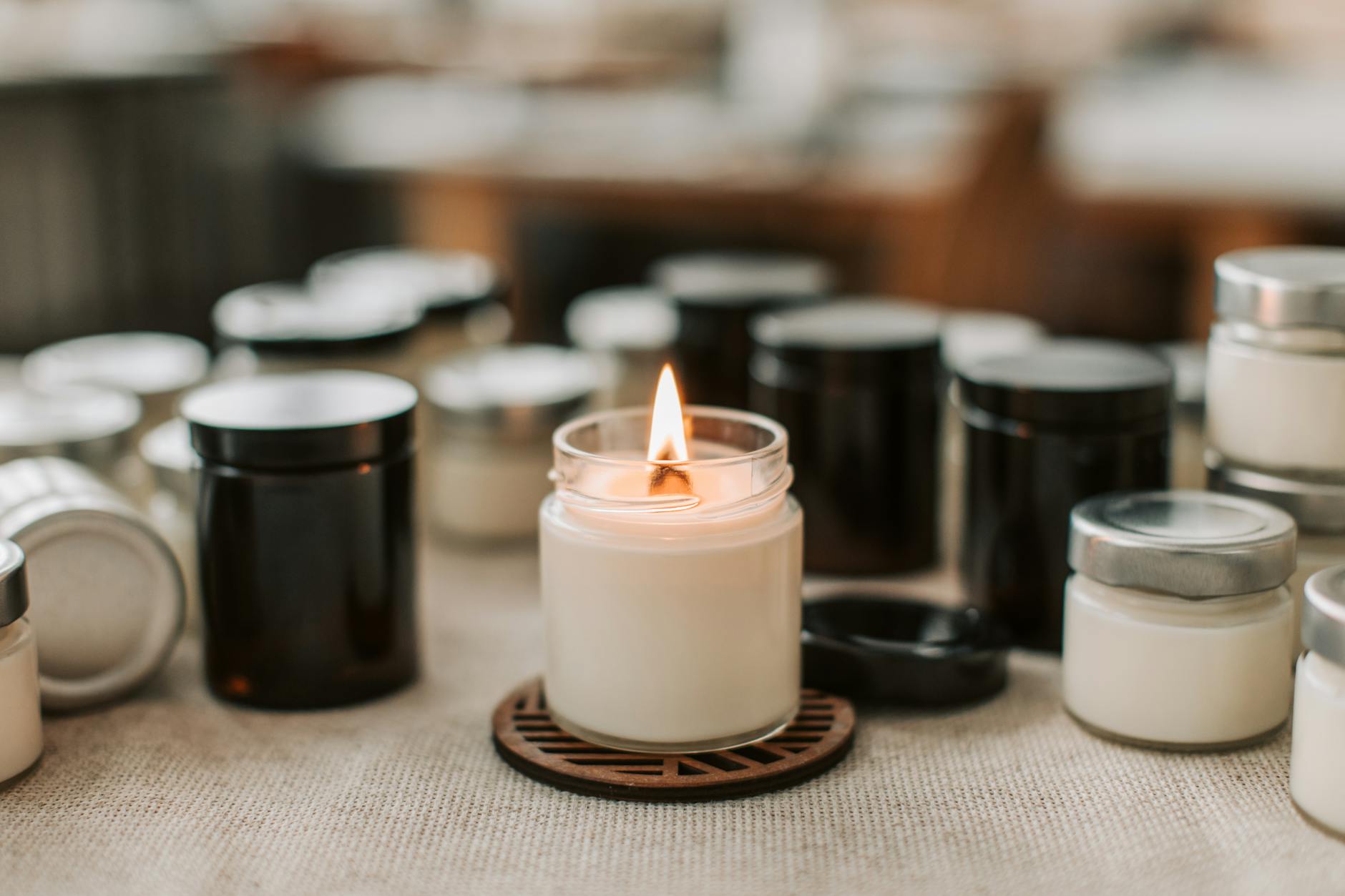
Getting Started with Candle Making in the UK
Candle making is one of those crafts that looks far more complicated than it actually is. If you’ve been scrolling through Instagram watching beautifully poured soy candles and thinking “I could never do that” – you absolutely can. Thousands of people across the UK are discovering this hobby every year, many of them starting with nothing more than a cheap starter kit from Amazon and a kitchen hob. Whether you’re hoping to make thoughtful gifts for friends, eventually sell at a local market, or simply enjoy a relaxing new creative outlet, candle making is genuinely one of the most accessible crafts you can pick up.
This guide will walk you through everything you need to know to get started confidently – from choosing your wax to understanding UK safety regulations. There’s no need to feel overwhelmed. By the end, you’ll have a clear picture of exactly what to buy, what to do, and what to watch out for.
Why Candle Making Is Perfect for UK Beginners
The UK craft scene is thriving right now. From independent markets in Bristol and Edinburgh to Etsy shops based in rural Yorkshire, handmade candles are genuinely in demand. Beyond the commercial opportunity, candle making fits brilliantly into the British lifestyle – it’s a cosy, indoor hobby that’s particularly satisfying during autumn and winter, which, let’s be honest, make up a significant portion of our year.
One of the great advantages for UK beginners is access to excellent domestic suppliers. You don’t need to import materials from overseas or wait weeks for delivery. Companies like Candle Shack in Glasgow, The Soap Kitchen based in Devon, and Aromatech supply everything you need at reasonable prices, often with helpful beginner guides on their own websites. The UK craft community is also wonderfully generous with knowledge – forums like Candle Making Forum UK and groups on Facebook are full of experienced makers willing to answer questions from newcomers.
The startup cost is modest too. A basic first batch of candles – enough to make six to eight small vessels – can cost between £30 and £60, depending on the materials you choose. That’s comparable to a single craft class, and you’ll end up with actual finished products at the end of it.
Understanding Your Wax Options
The wax you choose will affect everything: how your candle looks, how it burns, how strongly it throws scent, and how much it costs. There is no single “best” wax – each type has genuine advantages and drawbacks, and many experienced makers blend different waxes together to get the results they want. Here’s a straightforward comparison to help you decide where to begin.
| Wax Type | Best For | Scent Throw | Typical Cost (per kg) | Beginner Friendliness |
|---|---|---|---|---|
| Soy Wax | Container candles, eco-conscious makers | Good (especially when cured) | £5-£9 | High – very forgiving |
| Paraffin Wax | Pillars, votives, strong scent throw | Excellent | £3-£6 | High – widely understood |
| Coconut Wax | Luxury container candles | Very good | £10-£16 | Medium – can be trickier to work with |
| Beeswax | Natural, unscented or lightly scented candles | Naturally sweet, light | £12-£20 | Medium – burns well but expensive |
| Rapeseed Wax | Eco-friendly, UK-grown alternative | Good | £6-£10 | High – increasingly popular in UK |
For most beginners, soy wax or rapeseed wax is the ideal starting point. Soy wax is forgiving when you make mistakes (and you will make a few – that’s completely normal), it’s widely available, and it appeals to customers who are conscious about buying natural products. Rapeseed wax deserves special mention for UK makers because it’s actually grown here in Britain, making it a genuinely local and sustainable choice. You’ll often see fields of vivid yellow rapeseed flowers across the English and Scottish countryside in spring – knowing your candles are made from something grown nearby is a satisfying feeling.
Essential Equipment You’ll Need
You don’t need a professional workshop to start making candles. A clean kitchen counter, a few basic tools, and a careful approach to safety is all that’s required to produce your first batch. That said, having the right equipment from the beginning makes the process much smoother.
Here is a straightforward list of everything a beginner needs before their first pour:
- A pouring jug or pitcher – stainless steel or heat-resistant plastic, with a handle and a spout. This makes pouring into vessels significantly easier and cleaner.
- A double boiler or large saucepan – you’ll melt your wax using indirect heat (a bain-marie method), which prevents overheating and fire risk. Never melt wax directly over a flame without a water bath beneath.
- A digital thermometer – accurate temperature control is critical in candle making. A cheap probe thermometer from any UK kitchen shop will do the job perfectly.
- A digital kitchen scale – measuring by weight (in grams) rather than volume gives you consistent, repeatable results every time.
- Candle wicks and wick stickers – pre-tabbed wicks (those with a small metal base) are easiest for beginners. Wick size must match your vessel diameter – suppliers like Candle Shack provide helpful wick guides.
- Wick centring tools – these are the small wooden or metal bars that hold your wick upright while the wax sets. You can buy them cheaply or improvise with two pencils and a rubber band.
- Fragrance oils or essential oils – fragrance oils are generally recommended for beginners as they blend more reliably with wax. Essential oils can be used but require more careful testing.
- Candle dye or colourants (optional) – liquid dye or dye chips designed specifically for candles. Never use craft dye or food colouring, as they don’t bind properly to wax.
- Vessels or moulds – glass jars, tins, or ceramic pots for container candles. Charity shops and car boot sales across the UK are surprisingly excellent sources of cheap, interesting vessels for testing.
- A silicone spatula and stirring rod – for mixing fragrance into your melted wax and scraping out your pouring jug cleanly.
Your First Candle: A Simple Step-by-Step Process
Once you have your materials gathered, your first pour is genuinely exciting. Follow these steps carefully and you’ll have a working candle at the end of it.
- Prepare your workspace. Cover your surface with newspaper or a silicone mat. Wax is much easier to manage when you’re not also worried about ruining your kitchen counter. Have paper towels nearby for any spills – wax wipes away easily when warm, but becomes a real nuisance once set.
- Weigh your wax. A standard 20cl glass jar holds roughly 150g of wax. Weigh out your wax using your digital scale. Most beginners find making a small batch of four to six candles at once gives them enough practice without wasting materials if something goes wrong.
- Melt your wax slowly. Using your double boiler, melt the wax over medium-low heat. Stir occasionally. Most soy and rapeseed waxes melt fully around 65-75°C. Never leave melting wax unattended – it is a fire risk if overheated.
- Prepare your vessels while the wax melts. Stick your wick tabs to the bottom centre of each jar using wick stickers or a small dot of hot glue. Position your wick centring bars across the top of the jar to hold the wick straight.
- Add your fragrance oil. Once the wax reaches the correct temperature (check your supplier’s recommended “fragrance add temperature,” usually around 65-70°C for soy wax), remove it from the heat and stir in your fragrance oil. The standard fragrance load for soy wax is 6-10% by weight – so for 150g of wax, that’s roughly 9-15g of fragrance oil. Stir gently but thoroughly for at least two minutes to ensure the fragrance fully binds to the wax.
- Add colour if desired. A small amount of dye chip or a few drops of liquid dye goes a long way. Add sparingly and stir well.
- Pour at the correct temperature. Allow the wax to cool slightly – pouring temperature varies by wax type, but most soy waxes pour well between 55-65°C. Pouring too hot can cause sinkholes and poor adhesion to the vessel sides. Pour slowly and steadily.
- Leave to set undisturbed. Place your candles somewhere level and away from draughts. Do not move them while setting – vibrations can cause the wax to set unevenly. Soy wax typically takes 24-48 hours to fully cure, though it may look solid within a few hours.
- Trim your wick. Before burning (or selling), trim the wick to approximately 5mm. A wick that is too long will produce excessive soot and an uneven flame.
- Cure before testing. Soy candles benefit enormously from a curing period of at least 72 hours – ideally one to two weeks – before you burn them for the first time. This allows the fragrance to fully bond with the wax, improving scent throw significantly.
Common Beginner Mistakes and How to Avoid Them
Almost every beginner makes the same handful of mistakes, and the good news is that all of them are entirely fixable. Sinkholes – those craters that appear in the centre of the candle as it cools – are caused by the wax contracting. You can prevent them by pouring at a slightly lower temperature, or simply do a small top-up pour once the first layer has set. Either approach works well.
Frosting is another common issue, particularly with soy wax. It creates a white, powdery bloom on the surface or sides of the candle. It’s completely natural and doesn’t affect burn quality at all – it’s actually a sign that you’re using natural wax – but if you find it visually off-putting, pouring at a higher temperature and wrapping your candles in a towel as they cool can reduce it.
Weak scent throw disappoints many beginners. The most common cause is not curing the candle long enough before testing. Give your candles a full week before you judge the scent throw – the difference between a freshly poured candle and one that has
cured for a week can be quite remarkable. You should also check your fragrance load – soy wax typically holds between 6% and 10% fragrance oil by weight, and using too little is a far more common mistake than using too much. If you are measuring by volume rather than weight, switch to a digital scale immediately, as accuracy here makes a genuine difference to the finished result.
Sinkholes and uneven tops are another frequent frustration. These appear when the wax contracts as it cools and pulls away from the wick hole or forms a depression in the centre. The straightforward fix is to do a second pour: once your candle has set but is still slightly warm, poke relief holes around the wick with a skewer, then top up with wax poured at a slightly lower temperature than your first pour. Pouring your initial batch more slowly and avoiding draughts during cooling will also reduce the likelihood of sinkholes forming in the first place. Keep your workspace at a consistent room temperature if you can, as cold kitchens in winter are a common culprit.
Tunnelling – where the candle burns straight down the middle leaving a thick wall of unmelted wax around the edge – is almost always caused by the first burn being cut too short. Wax has a memory, and the melt pool from that first burn sets the pattern for every subsequent one. Always allow your candle to achieve a full melt pool reaching the edges of the vessel on its first burn, which typically means burning it for one hour per inch of the candle’s diameter. Choosing the correct wick size for your vessel and wax combination is equally important, and if tunnelling persists despite long first burns, you likely need to size your wick up.
Candle making rewards patience and methodical record-keeping more than almost any other craft. Keep a notebook logging your wax type, pour temperature, fragrance percentage, wick size, and cooling conditions for every batch you make. When something works beautifully, you will be able to reproduce it exactly; when something goes wrong, you will have the information needed to identify why. Start with simple, uncoloured container candles using a single fragrance, master the basics, then build from there. The UK has a thriving community of independent chandlers and craft suppliers, and forums and social media groups can be genuinely useful when you hit a problem that testing alone cannot solve. With a little practice and a willingness to work through the early failures, you will find candle making to be an absorbing and deeply satisfying craft.